 Tel:
Tel:  Email:
  WhatsApp:
 Description
Product Introduction
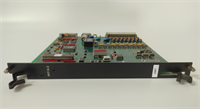
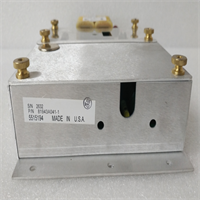
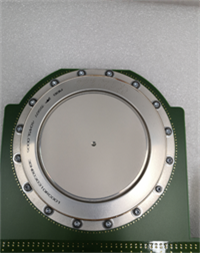
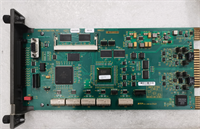
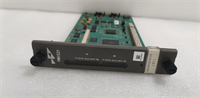
Plant automation engineers managing aging power plants or pulp & paper mills know the anxiety of running a critical DCS where spare parts are no longer manufactured. The ABB INNIS21 is the lifeline for these facilities, serving as the communication backbone for the MasterPiece 200/300 systems that have been running reliably for decades.We recently sourced these units for a hydroelectric station upgrade where the main controller rack needed a replacement NIS card to restore redundancy. Unlike modern Ethernet-based cards, the INNIS21 utilizes ABB’s robust, deterministic serial backplane architecture designed for high-noise industrial environments. It handles the polling of remote I/O drops and ensures that process data reaches the operator station without latency spikes. To be frank, finding a tested, working INNIS21 today is like finding a needle in a haystack; most available units are pulled from decommissioned sites, making verified new-old-stock incredibly valuable for preventing unplanned shutdowns.
Key Technical Specifications
| Parameter | Value |
|---|---|
| Part Number | INNIS21 (Often accompanied by suffixes like -A, -B depending on revision) |
| System Compatibility | ABB MasterPiece 200 (MP200), MasterPiece 300 (MP300) |
| Function | Network Interface Station (NIS) / Node Controller |
| Communication Protocol | ABB Proprietary Fieldbus / CS3000 compatible |
| Bus Speed | Legacy Serial Rates (Typically 1–5 Mbps dependent on config) |
| Redundancy | Supports Hot-Standby Redundancy (Pair configuration) |
| Indicators | RUN, FAIL, COMM, BUSY LEDs for diagnostic troubleshooting |
| Mounting | DIN Rail or Specific MP200 Chassis Slot |
| Power Input | Derived from Backplane (Typically 5VDC / 24VDC logic) |
| Operating Temperature | 0 °C to +60 °C (Industrial Standard) |
| Dimensions | Standard Eurocard or Proprietary MP Form Factor |
| Status | Obsolete / End of Life (EOL) |
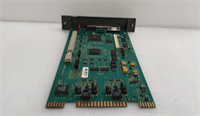
INNIS21 ABB
Application Scenarios & Pain Points
A combined cycle power plant faced a critical situation when their primary INNIS21 module failed, dropping the redundant link to the turbine control rack. Without a spare, they were running on a single path with zero fault tolerance. The failure of the second card would have triggered a full unit trip. The INNIS21 solves this by providing the dedicated hardware pathway that modern generic PLCs cannot replicate without a full system migration—which can cost millions and take years to validate.
- Power Generation (Boiler/Turbine Control): Need to maintain communication with legacy I/O racks that monitor flame safety and steam temperature? The INNIS21 is often the only card certified to talk to these specific older racks.
- Pulp & Paper Digesters: What if your process requires deterministic timing that standard Ethernet can’t guarantee due to network traffic? The proprietary bus architecture of the MP200 system, managed by the INNIS21, offers predictable scan times crucial for chemical injection loops.
- Water/Wastewater Treatment: Older lift stations controlled by MP200 systems rely on these nodes to aggregate data from remote pump stations over long distances using repeaters.
- Steel Mill Reheat Furnaces: High-temperature environments cause frequent electronic failures. Having a stocked spare INNIS21 allows for immediate swap-out during short maintenance windows without reprogramming.
Case Study:
A large refinery in Texas operates a fluidized catalytic cracker (FCC) unit controlled by an ABB MP200 system installed in the late 1990s. During a routine inspection, the maintenance team noticed the “FAIL” LED flickering on one of the redundant INNIS21 modules in the main control room. Recognizing the imminent risk of a dual-redundancy loss, they immediately swapped in a spare INNIS21 they had procured and pre-tested. The faulty card was sent for repair, but the swap took less than 15 minutes with no process disturbance. Had they waited to source a part after a total failure, the unit would have tripped on “Communication Loss,” resulting in an estimated 250,000/hour loss in production. The 4,000 investment in a spare card saved millions.Lessons Learned: Installation Pitfalls
- Firmware/Revision Mismatch — The INNIS21 has multiple hardware revisions (e.g., Rev A vs. Rev C). ❗ We encountered a case where a newer revision card was inserted into an older chassis backplane, causing a “Card Type Mismatch” error because the chassis firmware didn’t recognize the updated ID code. Always match the revision level of the spare to the existing running pair if possible.
- DIP Switch / Address Configuration — These modules often require manual node addressing via DIP switches or jumpers before insertion. If the address conflicts with another node on the same bus, the entire segment can go down. Document the switch settings from the failed card before removing it, then triple-check the new card.
- Backplane Pin Damage — The connectors on these legacy cards are fragile. Forcing the card into the slot at an angle can bend the backplane pins, permanently damaging the chassis (which is much harder to replace than the card). Use both hands and align strictly parallel before pushing home.
- Redundancy Sync Issues — When replacing one half of a redundant pair, the new card must sync with the active partner. If the active card has corrupted memory or a software hang, the new card will refuse to take over or sync. Sometimes a controlled reboot of the entire redundant pair (during a maintenance window) is required to clear the sync state.
- Static Sensitivity (ESD) — Being older CMOS technology, these cards are highly susceptible to Electrostatic Discharge. Touching the edge connector without a wrist strap can fry the communication ASIC. The card might appear to power up, but the communication port will remain dead. Always ground yourself.