 Tel:
Tel:  Email:
  WhatsApp:
 Description
Product Introduction
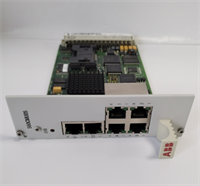
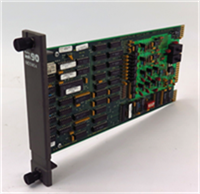
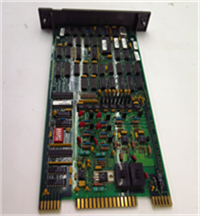
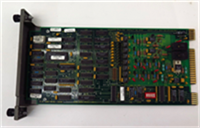
When a Net 90 system loses visibility into critical pump statuses or valve limits, the ABB IMDSM04 digital slave module often sits at the heart of the restoration effort. This specific 16-point input card bridges field devices to the NIS01 or NIS02 slave interface, ensuring data integrity for older DCS architectures still running vital processes.Don’t underestimate the scarcity of verified working units for this series; many available stocks suffer from capacitor leakage after decades of storage. Our tested IMDSM04 modules undergo full backplane communication checks to confirm they handshake correctly with the parent node before shipment. While newer systems migrate to Ethernet-based I/O, thousands of plants rely on this exact hardware to avoid costly control logic rewrites.
Key Technical Specifications
| Parameter | Value |
|---|---|
| Manufacturer | ABB / Bailey Controls |
| Module Type | Digital Input (Slave) |
| Channel Count | 16 Points |
| Input Voltage | 24 VDC (Nominal) |
| Logic Level | Positive Logic (Typical) |
| Isolation | Grouped (Channels share common return) |
| Current Draw | ~150 mA (Logic side, typical) |
| Field Power | Externally Supplied |
| Compatibility | Net 90, INFI 90 Systems |
| Mounting | Standard ABB Bailey Rack |
| Status Indicators | Per-channel LEDs + Fault LED |
| Operating Temp | 0 to 60 °C (Derated above 50 °C) |
IMDSM04 ABB
Application Scenarios & Pain Points
The alarm panel lit up at 3 a.m. when a turbine lube oil pressure switch failed to register a low-pressure condition. Investigation revealed the old IMDSM04 card had developed an intermittent fault on channel 7, causing the safety logic to miss the trip signal. Replacing it wasn’t just about swapping a card; it required verifying the entire 16-point loop to ensure no other channels were drifting due to age-related component stress.
- What happens when a petrochemical plant needs to expand monitoring points but cannot justify a full DCS migration? Keeping existing Net 90 racks active with verified IMDSM04 modules allows engineers to add 16 new discrete inputs per card without rewriting the primary controller code.
- In water treatment facilities, chlorine leak detectors often feed into these legacy digital inputs. If the module’s input impedance shifts over time, false alarms trigger unnecessary evacuations—costing upwards of $15,000 per incident in downtime and response fees.
- Metallurgy operations running continuous casters depend on these cards for limit switch feedback. A single missed “mold full” signal can result in a breakout, damaging equipment worth millions.
- Does your power generation unit still use hardwired emergency stops tied to Net 90 I/O? Regular testing of these specific input channels is mandatory, as firmware cannot compensate for failed physical input circuitry.
Case Study:
A mid-sized paper mill in the Pacific Northwest faced recurring nuisance trips on their boiler feedwater system. The maintenance team suspected wiring issues until they swapped the suspect IMDSM04 with a spare from our inventory. The new-to-them module resolved the issue instantly. Post-mortem analysis showed the original card’s optocouplers had degraded, raising the threshold voltage required to register a “high” state. The swap took 20 minutes, saving an estimated 8 hours of production loss valued at $42,000.Installation Pitfalls Guide (“Lessons Learned” Voice)I’ve seen good technicians burn out expensive legacy cards because they skipped the basics. Here is what actually goes wrong in the field:
- Firmware/Configuration Mismatch — Well, technically the IMDSM04 doesn’t hold firmware like a CPU, but the parent node configuration must match the slot location exactly. If the database says Slot 4 is an analog card and you plug in this digital module, the node will fault immediately. ❗ Verify the node configuration file before insertion.
- DIP Switch / Jumper Misconfiguration — Some revisions of Net 90 I/O require specific termination or addressing jumpers. Factory defaults rarely match your site’s specific wiring scheme. Take a photo of the old card’s jumper settings. Then take another one. Do this before you pull the old card.
- Terminal / Wiring Incompatibility — Pin definitions can change slightly between revision levels or if someone previously hacked the wiring for a temporary fix. Cross-check your wiring diagram against the actual terminal block labeling, especially if the previous maintainer used tape labels instead of printed markers.
- Power Supply Undersizing — Adding a new module to an old rack might push the 24 VDC supply over the edge. Calculate the full rack load with 20% headroom. I’ve seen racks brown-out because a new card drew just enough extra current to trip an aging power supply.
- ESD Damage — Skip the wrist strap once, and a $2,000 module can smoke on first power-up. Legacy CMOS components are incredibly sensitive. Don’t underestimate this. Ground yourself on the rack chassis before touching the connectors.