 Tel:
Tel:  Email:
  WhatsApp:
 Description
Product Introduction
For control systems engineers maintaining aging power generation or pulp & paper facilities running on ABB’s INFI 90 or Symphony platforms, the IMBLK01 is the unsung hero of the control cabinet. While the intelligent modules (the “brains”) get the attention, the IMBLK01 is the “spine” that physically holds them and routes thousands of critical signals from the field sensors to the processor.We recently supplied these backplanes to a nuclear facility undergoing a mid-life extension where the original terminal blocks had become brittle and prone to cracking due to decades of thermal cycling. Replacing the IMBLK01 allows the plant to retain their existing, proven I/O modules while refreshing the connection points, eliminating intermittent faults caused by oxidized or loose terminals. Unlike generic terminal strips, the IMBLK01 features the precise pin-spacing and bus-bar integration required for the proprietary “Immersion” connector to seat correctly. To be frank, trying to force an immersion module into a non-genuine or damaged backplane is a recipe for bent pins and catastrophic communication loss.
Key Technical Specifications
| Parameter | Value |
|---|---|
| Part Number | IMBLK01 (May have suffixes like -A, -B indicating revision) |
| System Compatibility | ABB Bailey INFI 90, Symphony Plus (Legacy Nodes) |
| Compatible Modules | Standard “Immersion” Style Modules (IMASI, IMDSI, IMMFP, etc.) |
| Connection Type | Field Wiring Terminals (Screw or Spring) to Backplane Pins |
| Mounting Style | DIN Rail (35mm) or Direct Panel Mount |
| Channel Density | Typically supports 16-32 channel modules (depending on specific module used) |
| Bus Architecture | Parallel backplane bus for power and data distribution |
| Material | High-grade flame-retardant thermoplastic (UL94 V-0) |
| Operating Temperature | -20 °C to +70 °C |
| Voltage Rating | Typically rated for 250VAC / 300VDC isolation |
| Dimensions | Standard INFI 90 Immersion Footprint |
| Status | Obsolete / End of Life (EOL) – Limited Availability |
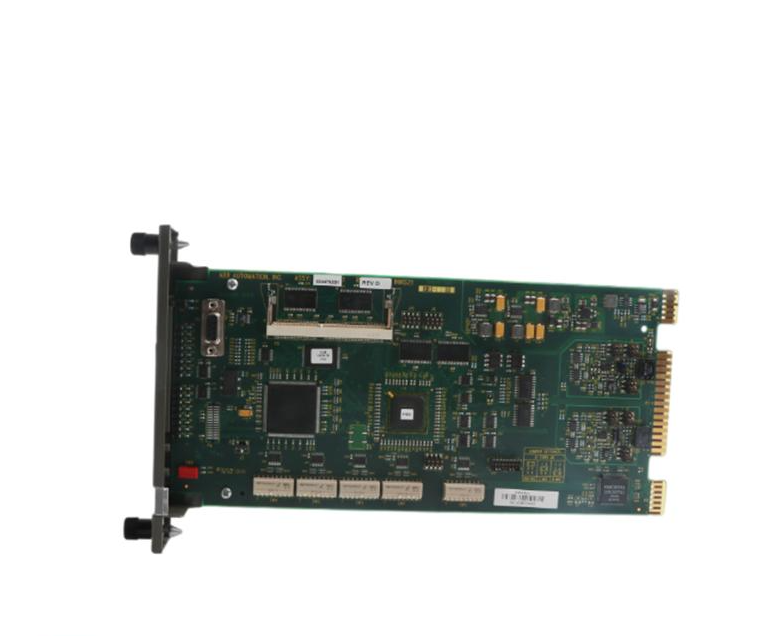
IMBLK01 ABB
Application Scenarios & Pain Points
A combined-cycle power plant experienced erratic trips on a gas turbine because a single corroded pin inside an old IMBLK01 backplane was causing intermittent loss of the flame detector signal. The intelligent module itself was fine, but the path to the field was broken. Replacing the IMBLK01 restored solid continuity. This component is vital because it bridges the gap between the fragile electronics of the DCS and the harsh reality of field wiring (vibration, moisture, corrosion).
- Power Generation (Boiler/Turbine): Need to replace cracked terminal blocks without rewiring the entire cabinet? The IMBLK01 allows for a “lift-and-shift” of existing wire ferrules if the terminal layout matches, or a clean re-termination with improved contact reliability.
- Water/Wastewater Treatment: Older lift stations using INFI 90 logic often suffer from moisture ingress. The IMBLK01 provides a sealed interface point; replacing water-damaged units prevents short circuits between adjacent channels.
- Oil & Gas Pipelines: Remote station controllers rely on these backplanes to aggregate data from RTUs. Vibration can loosen screw terminals over time; newer revisions of the IMBLK01 often feature improved locking mechanisms or spring-cage options to resist vibration.
- Steel Mill Reheat Furnaces: High ambient heat degrades plastic insulators. Swapping out heat-warped IMBLK01 units prevents arcing and ensures the immersion modules seat flushly.
Case Study:
A large paper mill in the Pacific Northwest faced a nightmare scenario: their primary digester control node was throwing “Module Fault” alarms every few hours, cycling through different I/O cards. The maintenance team replaced three expensive intelligent modules ($5k each) with no success. Finally, a senior engineer inspected the IMBLK01 backplane and discovered that the internal bus bars had delaminated due to age, causing intermittent power drops to the modules. They ordered four spare IMBLK01 units. During a scheduled shutdown, they swapped the backplanes. The process involved carefully transferring the field wiring to the new terminals. Once powered up, the system ran flawlessly for the next 5 years. The cost of the backplanes (<$500 total) saved weeks of production losses and thousands of dollars in unnecessary module replacements.Lessons Learned: Installation Pitfalls
- Pin Alignment & Bending — The backplane pins that mate with the immersion module are delicate. ❗ We once saw a technician force a module onto an IMBLK01 that wasn’t fully latched to the DIN rail, bending 4 critical power pins. This shorted the 24VDC supply to ground, blowing fuses on the entire node. Always ensure the backplane is securely mounted and visually inspect pins for straightness before inserting the module.
- Wire Ferrule Compatibility — Older installations may use large, frayed wire strands or oversized ferrules that don’t fit the new IMBLK01 terminal clamps. Forcing them can crack the terminal housing. Inspect wire ends; re-terminate with proper ferrules if the original wires are damaged or too bulky.
- Backplane Revision Mismatch — While rare, early revisions of the IMBLK01 might have slightly different pinouts for auxiliary power compared to later versions. If mixing revisions in the same rack, verify the pinout diagram on the side of the unit matches your module’s requirements.
- Grounding Loops — The IMBLK01 chassis often provides a grounding point for shield drains. If you ground the shield at the field device AND at the IMBLK01, you create a ground loop that introduces noise into analog signals (4-20mA). Follow the “ground at one end” rule unless the system manual specifies otherwise.
- Static Discharge (ESD) — Even though it’s a passive block, the backplane connects directly to sensitive CMOS chips in the modules. Inserting a module into a live backplane without ESD protection can zap the module’s input circuitry. Always wear a wrist strap when handling modules near the exposed backplane pins.