 Tel:
Tel:  Email:
  WhatsApp:
 Description
Product Introduction
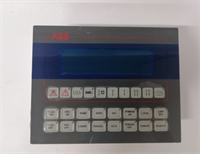
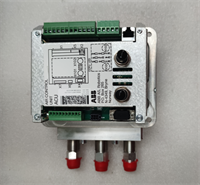
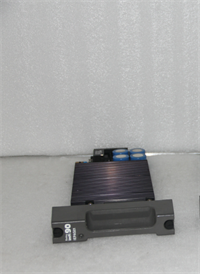
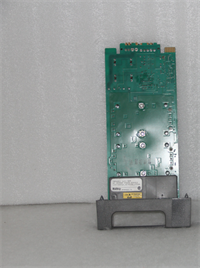
When a Net 90 rack loses power, the entire process cell goes blind, making the ABB IEPAS01 power supply module a critical spare for any plant running legacy Bailey systems. This unit converts incoming AC or DC line voltage into a stable 24 VDC bus, feeding up to 10 amps of current to digital and analog I/O cards seated in the same chassis. Its design prioritizes noise immunity, essential for maintaining signal integrity in electrically noisy industrial environments like steel mills or power generation stations.Sourcing reliable replacements is tricky because older units often suffer from capacitor degradation after 20+ years of service. We verify output ripple and load regulation on every IEPAS01 before shipping to ensure it won’t cause intermittent faults in sensitive communication modules. While many facilities plan migrations to modern DCS architectures, the cost of rewriting thousands of control loops keeps these original power supplies in active demand for immediate swap-outs.
Key Technical Specifications
| Parameter | Value |
|---|---|
| Manufacturer | ABB / Bailey Controls |
| Module Type | Power Supply Unit (PSU) |
| Output Voltage | 24 VDC (Regulated) |
| Max Output Current | 10 Amps |
| Input Voltage | 85–264 VAC or 90–300 VDC (Wide Range) |
| Frequency | 47–63 Hz |
| Efficiency | >85% (Typical) |
| Hold-up Time | 20 ms (Minimum at full load) |
| Protection | Over-voltage, Over-current, Short-circuit |
| Mounting | Standard ABB Bailey Net 90 Rack |
| Status Indicators | AC OK, DC OK, Fault LEDs |
| Operating Temp | 0 to 60 °C |
| Dimensions | Standard Single-slot Width |
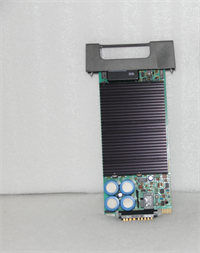
IEPAS01 ABB
Application Scenarios & Pain Points
The shift supervisor noticed erratic behavior in a boiler feedwater control loop: valves hunting randomly and pressure readings fluctuating without process changes. The root cause wasn’t the controller logic but a failing IEPAS01 power supply that allowed the 24 VDC bus to dip during high-load transients. This voltage sag caused digital input modules to misread switch states, triggering false alarms. Replacing the PSU stabilized the bus voltage within seconds, restoring normal operation.
- What keeps a petrochemical distillation column running when the main control system is decades old? Redundant power configurations using pairs of IEPAS01 units ensure that a single supply failure doesn’t trip the safety system, providing crucial uptime for continuous processes.
- In water treatment plants, variable frequency drives (VFDs) generate significant electrical noise. The IEPAS01’s robust filtering prevents this noise from coupling into the 24 VDC logic bus, which could otherwise corrupt data from pH sensors and flow meters.
- Does your mining conveyor system experience frequent brownouts? The wide input voltage range (85–264 VAC) of this module allows it to ride through grid fluctuations that would reset standard commercial power supplies.
- Metallurgy operations with long cable runs to remote I/O racks face voltage drop issues. Placing an IEPAS01 locally at the remote rack ensures the modules receive a solid 24 VDC, eliminating errors caused by line resistance.
Case Study:
A pulp and paper mill in the Southeast faced recurring “communication loss” alarms on their Net 90 network every time a large chipper motor started. The inrush current caused a momentary dip in the facility’s AC power, which the aging original power supply couldn’t bridge. The maintenance team installed two new IEPAS01 units in a redundant configuration. The hold-up time specification of the new units successfully bridged the 15ms dip, and the communication alarms ceased permanently. The fix cost 3,000 in parts versus an estimated 50,000 in lost production from a potential unplanned shutdown.Installation Pitfalls Guide (“Lessons Learned” Voice)Power supplies seem simple until they take down a whole unit. Here are the mistakes I’ve seen engineers make:
- Firmware/Configuration Mismatch — While the IEPAS01 doesn’t have user firmware, some newer revision power supplies interact differently with very old backplane monitoring circuits. ❗ Check the revision letter on the label. If you mix vastly different revisions in a redundant pair, they might not share load correctly.
- DIP Switch / Jumper Misconfiguration — Some power supply models have jumpers for AC vs. DC input selection or voltage ranges. The factory default is usually AC. If you connect 24 VDC to the AC terminals because you missed a jumper setting, you will fry the input rectifier instantly. Take a photo of the jumper block. Then take another one.
- Terminal / Wiring Incompatibility — The output terminals carry high current. Using undersized wire or loose crimps leads to heating and eventual melting of the terminal block. Cross-check your wire gauge against the 10A rating, especially if you are daisy-chaining power to multiple racks.
- Power Supply Undersizing — Don’t just sum the nominal current of your modules. Calculate the full rack load with 20% headroom for inrush currents and future expansion. I’ve seen systems fail because a technician added a new communication card that pushed the total draw to 10.1A on a 10A supply.
- ESD Damage — Even though it’s a power supply, the internal monitoring electronics are sensitive. Skip the wrist strap once, and you might damage the “DC OK” sensing circuit. The supply will output 24V, but the system won’t see it as “valid,” causing a fault. Ground yourself before handling the card.