 Tel:
Tel:  Email:
  WhatsApp:
 Description
Key Technical Specifications
| Parameter | Specification | Notes |
|---|---|---|
| Processor Speed | 16 MHz | Typical for this generation |
| Memory (RAM) | 512 KB | User program storage |
| Memory (EPROM) | 256 KB – 1 MB | Depending on specific sub-version |
| Communication Ports | 2 x Serial (RS232/RS485) | Configurable via DIP switches |
| Protocol Support | CS31, Modbus RTU | Primary fieldbus interfaces |
| Supply Voltage | 24 V DC ±10% | Critical tolerance range |
| Power Consumption | Approx. 15 W | Heat dissipation required |
| Operating Temp | 0°C to +55°C | Derate above 45°C |
| Storage Temp | -25°C to +70°C | Avoid humidity condensation |
| Dimensions | 225 x 145 x 60 mm | Standard rack mount size |
| Weight | ~0.8 kg | Includes metal housing |
| Protection Class | IP20 | Indoor use only |
Product Introduction
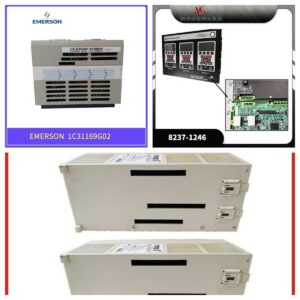
Walking into a plant running MasterPiece 200 systems feels like stepping back in time, but let’s be honest: if it ain’t broke, don’t fix it. The ABB HIEE300024R2 (UAA326A02) is the heart of those old Advant OCS stations that have been controlling turbines and conveyors since the early 90s. I’ve pulled these out of racks coated in ten years of cement dust, and they still booted up without a hitch. That’s the kind of reliability you just don’t see in some of the new “smart” controllers that crash every time the Wi-Fi hiccups.Engineers keep hunting for this specific revision because it handles the legacy CS31 network traffic without choking. While newer CPUs might boast faster clocks, they often struggle with the timing nuances of old peripheral cards. This unit executes a standard 1K logic scan in under 2ms, which was lightning fast back then and is still plenty quick for most batch processes today. Just a heads-up: this specific revision is notoriously picky about grounding. If your cabinet ground isn’t solid, expect random comm faults that will drive you crazy. But get the grounding right, and this thing runs forever.
 Quality SOP & Tech Pitfalls (The Reality Check)
 Quality SOP & Tech Pitfalls (The Reality Check)
The Lab Report (SOP)
We don’t just ship boxes; we verify functionality. Every HIEE300024R2 goes through a strict four-step check before it leaves our bench. First, a visual inspection under magnification to spot any counterfeit markings or bent pins on the backplane connector. Next, we load it into a live MasterPiece 200 test rack and run a diagnostic loop for 4 hours, monitoring CPU load and memory integrity. We then use a Fluke 1507 to check insulation resistance between the chassis and terminals, ensuring no internal shorts. Finally, we log the firmware version stamped on the EPROM chips and seal the unit in fresh anti-static bags with desiccant. You get a PDF report with these numbers, not just a generic “passed” sticker.The Engineer’s Warning (Pitfalls)
Here is where people mess up. The biggest disaster I’ve seen involved a tech swapping this CPU without copying the DIP switch settings from the old card. The HIEE300024R2 uses these switches to set the node address and baud rate. If you leave them at factory default, the controller sits there silently while the rest of the network times out. I once watched a team spend six hours troubleshooting a “dead” network, only to find Switch 3 was in the wrong position. Also, watch out for ESD. These old CMOS chips are fragile. Touch the metal frame before you handle the card, or you might fry the CPU instantly. Don’t be the guy who kills a $2,000 part because he skipped the wrist strap.
Installation & Configuration Guide
Swapping this CPU isn’t rocket science, but rushing it causes downtime. Follow this sequence.
- Pre-Installation: ⚠️ Shut down power to the entire rack. Wait at least 30 seconds for capacitors to discharge. Take a high-resolution photo of the old module’s DIP switches and wiring labels. Do not rely on memory.
- Removal: Label every cable connected to the front ports. Release the DIN rail clips or mounting screws carefully. Pull the old module straight out; do not wiggle it excessively as this can damage the backplane pins.
- Installation: Copy the DIP switch settings exactly from your photo to the new HIEE300024R2. This single step prevents 90% of startup failures. Align the backplane connector and push firmly until the module seats completely. Secure the mounting hardware.
- Power-On & Testing: Reconnect communication cables first. Apply 24V DC power. Watch the LED sequence: Power should turn green immediately, followed by the Run LED flashing then going steady. If the Fault LED blinks red, check your switch settings again. Download the backup program and verify I/O status.
Compatible Replacement Models
| Compatibility Tier | Model Number | Details & Differences |
|---|---|---|
| ✅ Drop-in Replacement | HIEE300024R2 (Same Rev) | Exact hardware and pinout match. No code changes needed. Best option for uptime. |
| ⚠️ Software Compatible | HIEE300024R1 | Earlier revision. Hardware fits, but may require a firmware update or slight timing adjustment in the logic. |
| ❌ Hardware Mod Required | AC 800M Series | Completely different architecture. Requires new chassis, rewiring, and full code migration. Only do this for a total system overhaul. |
Frequently Asked Questions (FAQ)
Q: Can I hot-swap this CPU while the system is running?
A: Absolutely not. This is a legacy single-redundancy system. Pulling the CPU kills the logic scan immediately, shutting down the process. You must schedule a downtime window.Q: How do I know if the firmware version matches my old one?
A: Check the label on the EPROM chips visible through the window or on the side sticker. It usually looks like “Vx.x”. If the versions differ significantly, your program might not load, or timing could shift. Send us a photo of your old chip, and we’ll match it.Q: Is this unit actually new or just refurbished?
A: We sell “New Surplus.” These are original ABB units that were bought years ago and sat in a climate-controlled warehouse. They have never been powered on. We test them before shipping, but they come in original factory seals whenever possible.Q: What happens if I lose the DIP switch settings?
A: You’re in trouble. There is no auto-detect for node addresses on this old network. You’ll need to dig up the original system documentation or trace the network config from the engineering station. Guessing will cause network collisions.Q: Does this support modern Ethernet protocols?
A: No. It only has serial ports (RS232/485). If you need Ethernet, you have to add a separate gateway module or upgrade the whole system. Don’t try to hack an Ethernet jack onto this board; it won’t work.Q: What is the lead time if you don’t have it in stock?
A: Since this is obsolete, stock fluctuates. If we don’t have it on the shelf, we can usually source it from our global network within 3-5 days. If you need it sooner, call us directly; sometimes we have one sitting on a test bench.Q: Can I repair my existing unit instead of buying a replacement?
A: Honestly? Rarely worth it. The components are surface-mount and proprietary. By the time you pay for diagnostics and repair labor, you’re close to the cost of a guaranteed surplus unit that comes with a warranty. Swap it and keep the old one as a core for parts.