Tel:
Tel:  Email:
  WhatsApp:
 Description
Key Technical Specifications (For Spare Part Verification)
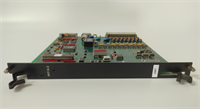
- Product Model: GFD233A103
- ABB Order Code: 3BHE022294R0103
- Manufacturer: ABB
- System Family: EX2100 / UNITROL® 6000 series static excitation systems
- Function: Isolated analog gate pulse amplifier for 6-pulse or 12-pulse thyristor bridges
- Input: Low-voltage logic-level firing commands from SPA or GVC regulator boards
- Output: High-current, isolated gate drive signals (typically ±5 V to ±10 V, >1 A peak) per thyristor
- Isolation Voltage: ≥4 kV RMS between control and power sides
- Power Supply: ±15 V DC (derived from system backplane or local DC/DC converter)
- Channels: Supports up to 6 or 12 outputs depending on bridge configuration
- Mounting: Edge-card connector in excitation controller rack
- Diagnostics: No local indicators; faults manifest as system alarms (e.g., “Pulse Missing,” “Field Current Deviation”)
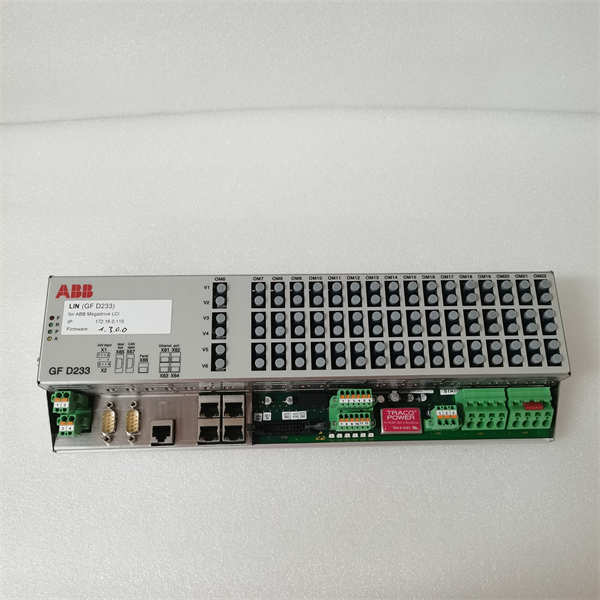
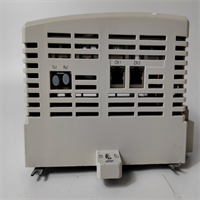
ABB GFD233A103 3BHE022294R0103
System Role and Downtime Impact
The GFD233A103 is a mission-critical interface within legacy ABB excitation systems used on utility-scale synchronous generators. It ensures accurate, synchronized triggering of thyristors that regulate DC field current—directly influencing terminal voltage, reactive power output, and grid stability. Because it operates at the boundary between low-voltage control electronics and high-power semiconductors, its reliability is paramount. A degraded or failed GFD233A103 can cause asymmetric firing, reduced field current, or complete loss of excitation. This typically triggers protective relays such as loss-of-field (40), under-excitation (25), or generator differential trips, resulting in an unplanned unit outage. In most installations, this board is not redundant; thus, a single point of failure can halt multi-megawatt generation, with financial impacts exceeding tens of thousands of dollars per hour.
Reliability Analysis and Common Failure Modes
Despite robust design, the GFD233A103 exhibits predictable aging effects due to its mixed-signal, high-isolation architecture:
- Gate driver IC or output transistor fatigue: Repeated high di/dt switching causes thermal stress, leading to reduced drive strength or intermittent pulses.
- Isolation transformer or optocoupler degradation: Long-term exposure to voltage transients or humidity compromises dielectric integrity, risking control-side damage during power-side faults.
- Electrolytic capacitor drying: Local filtering capacitors lose capacitance over time, introducing noise into gate signals or causing bias instability.
- Solder joint micro-cracking: Thermal cycling from nearby power components induces mechanical fatigue, especially at high-current output pins.
- Analog component drift: Precision resistors and op-amps shift values, altering pulse timing skew between phases—critical in multi-bridge systems.
Notably, the board lacks self-monitoring; failures are only detected indirectly through system performance anomalies. Preventive maintenance should include:
- Offline functional testing using pulse simulators and oscilloscopes to verify amplitude, rise time, and timing accuracy
- Infrared inspection during operation to identify abnormal heating
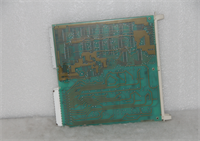
- Visual examination for PCB discoloration, capacitor bulging, or cracked solder joints
- Secure storage of verified spares in climate-controlled, ESD-safe conditions

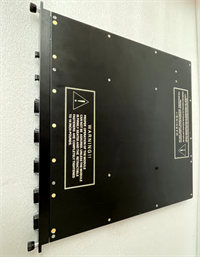
ABB GFD233A103 3BHE022294R0103
Lifecycle Status and Migration Strategy
ABB has formally discontinued the GFD233A103. The part is no longer manufactured, and technical support is limited to archived manuals. No factory repairs, recalibration, or firmware updates are available. Continued reliance introduces severe operational risk—especially as installed units exceed 15–20 years of service life.
Short-term mitigation includes:
- Procuring tested-used units from specialized power industry surplus vendors (with waveform validation)
- Engaging third-party repair services capable of replacing driver ICs, capacitors, and isolation components, followed by full pulse calibration
The recommended long-term path is a full excitation system modernization to ABB’s UNITROL 6800 or UNITROL 8000 platforms. These digital systems replace discrete analog boards like the GFD233A103 with integrated, software-defined gate drive modules featuring:
- Real-time pulse diagnostics
- Predictive health monitoring
- Compliance with modern grid codes (e.g., IEEE PSS4B, ENTSO-E RfG)
Migration requires:
- Replacement of the entire excitation controller chassis
- Rewiring of gate and feedback cables
- Recommissioning of AVR algorithms, limiters, and protection functions
- Performance validation via step-response and stability tests