
 Tel:
Tel:  Email:
  WhatsApp:
 Description
Key Technical Specifications (For Spare Part Verification)
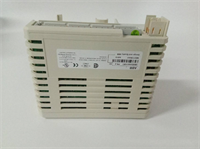
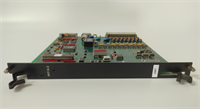
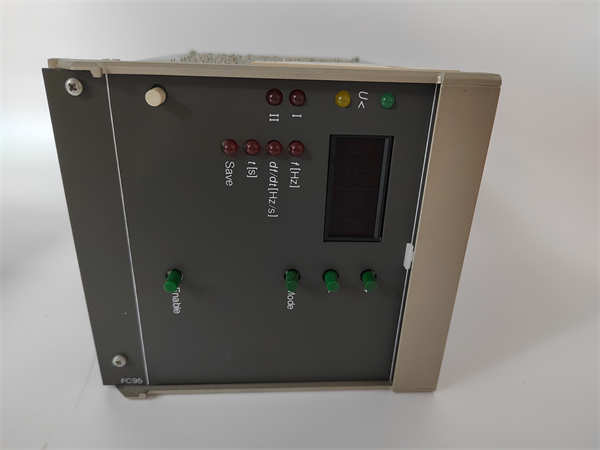
- Product Model: FC95-22
- Manufacturer: ABB
- System Family: AC 110 / AC 400 (predecessor to AC 800M platform)
- Module Type: Field controller with integrated I/O processing
- Supported I/O Types: Mixed analog and discrete signals (variant-dependent; typically 8–16 channels)
- Communication Interface: Proprietary serial or parallel bus to master controller (e.g., MC91)
- Protocol: ABB-specific (e.g., COMLI or internal AC 400 protocol)
- Power Supply: +5 VDC and ±12 VDC from system backplane
- Diagnostic Features: Basic LED indicators (POWER, COMM, FAULT); no per-channel diagnostics
- Mounting: Slide-in module for standardized ABB control rack
- Operating Temperature: 0°C to 55°C
System Role and Downtime Impact
The FC95-22 functions as a remote I/O station or local intelligence unit in legacy ABB AC 110/400 systems, commonly deployed in thermal power plants, hydro stations, and industrial process facilities. It digitizes field inputs (e.g., pressure, temperature) and executes output commands (e.g., valve positioning, pump start/stop) under supervision of a central MC91 or similar CPU. In many configurations, it handles time-critical or safety-related loops locally to reduce central load. Failure of an FC95-22 can result in loss of multiple field signals or actuator control—potentially triggering alarms, disabling interlocks, or forcing manual operation. In non-redundant architectures, this often leads to partial or full process interruption until the module is replaced and re-commissioned.
Reliability Analysis and Common Failure Modes
Despite robust original construction, the FC95-22 is now vulnerable due to decades of service and obsolete components. Common failure modes include degradation of analog front-end circuits (causing signal drift or noise), failure of onboard voltage regulators (leading to communication dropouts), and corrosion on backplane connectors (resulting in intermittent I/O). The module’s reliance on electrolytic capacitors and custom ASICs—many of which are no longer manufactured—makes board-level repair increasingly difficult.
A key design limitation is the absence of modern diagnostics; technicians cannot isolate faults to specific channels without external test equipment. Additionally, firmware is stored in mask ROM or early flash devices that may degrade over time, causing boot failures. Preventive maintenance should emphasize: (1) periodic loop calibration using precision sources; (2) inspection of backplane contacts for oxidation or mechanical wear; (3) verification of stable power rails under load; and (4) maintaining offline backups of configuration data, where extractable.

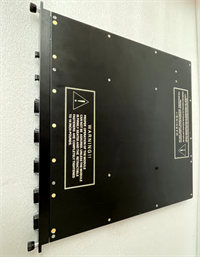
ABB FC95-22 HESG440295R2 HESG448688R22
Lifecycle Status and Migration Strategy
ABB discontinued the AC 110/400 platform years ago, and the FC95-22 is no longer supported. Official documentation, spare parts, and repair services are unavailable through standard channels. Remaining inventory exists only in decommissioned sites or through niche brokers—often without functional validation. Continued use introduces significant operational and compliance risk, particularly in regulated industries.
Short-term mitigation includes securing tested spares, implementing rigorous preventive checks, or commissioning specialized firms for component-level refurbishment. However, these are not sustainable.
The recommended long-term solution is migration to a modern I/O architecture such as ABB’s AC 800M with compatible I/O modules (e.g., CI854 for PROFIBUS or TB5xx/TB8xx for local I/O). This transition enables reuse of field wiring (with marshaling updates), integration with System 800xA or Ability™ platforms, and access to advanced diagnostics and cybersecurity features. While requiring engineering effort—including logic revalidation and I/O remapping—the move ensures regulatory compliance, support continuity, and alignment with current automation standards. A risk-prioritized, phased approach is advised to manage cost and minimize operational disruption.