 Tel:
Tel:  Email:
  WhatsApp:
 Description
Key Technical Specifications (For Spare Part Verification)
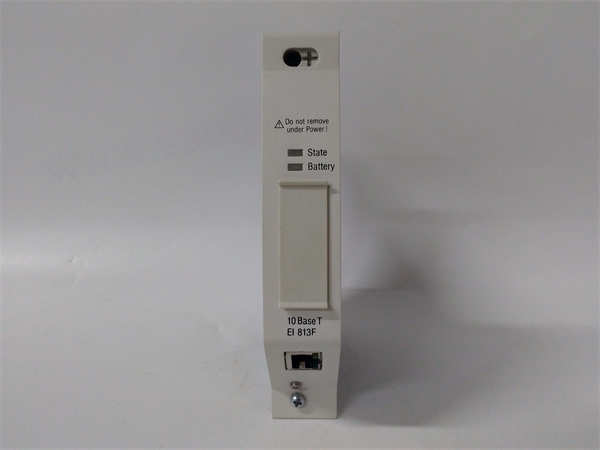
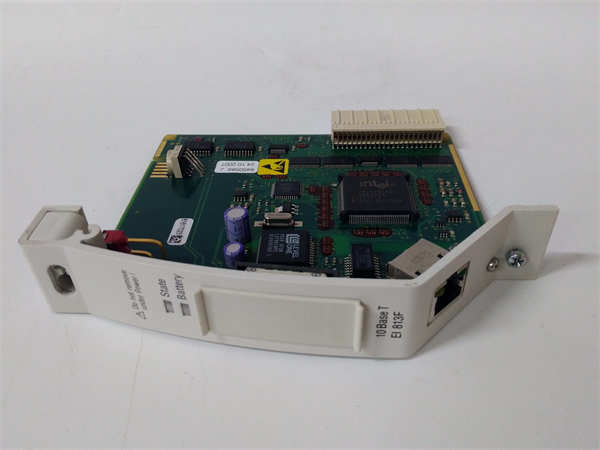
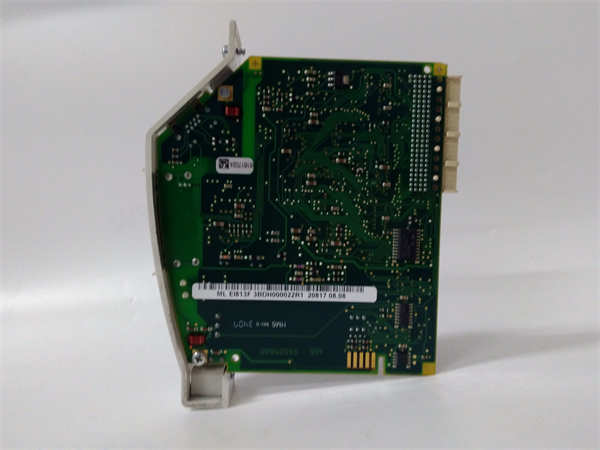
- Product Model: EI813F
- Manufacturer: ABB
- System Family: MasterPiece 200 / MasterPiece 300 (predecessor to AC 800M)
- ABB Order Code: 3BDH000022R1
- Input Channels: 16, grouped in blocks of 8 with common return
- Input Type: Sinking (NPN-compatible), 24 VDC nominal
- Input Voltage Range: 15–30 VDC (ON); <5 VDC (OFF)
- Input Current: ~7 mA per channel at 24 VDC
- Isolation: Optical isolation between field and logic sides
- LED Indication: One status LED per channel
- Backplane Compatibility: Requires MasterPiece-specific I/O chassis (e.g., MP200/MP300 rack)
- Power Consumption: Approx. 2.5 W from internal +5 VDC logic supply
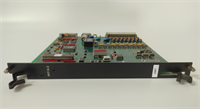
- Physical Form Factor: Proprietary ABB plug-in module (approx. 150 mm height)
-

EI813F 3BDH000022R1
System Role and Downtime Impact
The EI813F is a foundational digital input module in legacy ABB MasterPiece 200/300 control systems, widely deployed in industrial facilities from the 1980s through the early 2000s—particularly in pulp & paper, mining, and municipal water systems. It directly interfaces with field devices such as motor starters, position sensors, and emergency stop buttons, providing the controller with real-time binary status information. In many installations, these inputs feed into critical safety or sequencing logic. If the EI813F fails—due to optocoupler degradation, power regulation issues, or backplane contact faults—the PLC loses visibility into those field states. This can cause false alarms, inhibit automatic sequences, or—more critically—disable safety functions if redundant monitoring is absent. Given the age of these systems, redundancy at the I/O level was rarely implemented, making this module a single point of failure with potentially severe operational consequences.
Reliability Analysis and Common Failure Modes
Although robust for its era, the EI813F is now operating far beyond its design life, and component aging is the dominant failure driver. Common failure modes include:
- Optocoupler degradation: The internal LEDs and phototransistors lose efficiency over time, leading to missed transitions or intermittent signal dropout—especially under low-input-current conditions.
- Input resistor drift: Series current-limiting resistors can shift value due to thermal stress, altering the effective input threshold and causing unreliable switching.
- Backplane connector corrosion: Decades of exposure to industrial atmospheres cause oxidation on the edge connector pins, resulting in poor contact resistance and communication errors with the CPU.
- Power rail instability: Aging decoupling capacitors on the +5 VDC logic supply line can cause internal resets or erratic behavior during voltage sags.
Preventive maintenance should focus on periodic functional testing of all channels using a simulated 24 VDC source, cleaning backplane contacts with contact enhancer spray, inspecting for PCB delamination or capacitor bulging, and verifying that input wiring uses proper shielding and grounding practices to minimize noise-induced glitches.
-
EI813F 3BDH000022R1
Lifecycle Status and Migration Strategy
ABB discontinued the MasterPiece series decades ago, and the EI813F (3BDH000022R1) has been obsolete for over 20 years. No official spares exist, and technical documentation is increasingly difficult to source. Continued operation relies entirely on a dwindling pool of used modules, often salvaged from decommissioned sites with unknown usage history. The risk of sudden, unrecoverable failure is high, and troubleshooting support is virtually nonexistent. Short-term mitigation includes maintaining a small inventory of tested spares, implementing external signal duplication for critical inputs, and isolating the system from network-based threats. However, the only sustainable long-term solution is full migration to a modern platform. ABB’s recommended path is transition to the AC 800M controller with S800 I/O, which offers superior performance, cybersecurity features, and ongoing lifecycle support. This requires complete re-engineering of the control logic (typically in Control Builder M), replacement of I/O modules, and operator retraining—but it eliminates obsolescence risk and aligns the facility with current industrial standards. For asset owners unable to execute immediate migration, a phased approach—starting with the most critical or failure-prone subsystems—is strongly advised, coupled with a formal end-of-life management plan that defines a hard retirement date for the MasterPiece infrastructure.