 Tel:
Tel:  Email:
  WhatsApp:
 Description
Key Technical Specifications
| Parameter | Specification |
|---|---|
| Output Type | Electromechanical relays (Form C: Normally Open + Normally Closed) |
| Contact Rating | 250 V AC / 30 V DC, 2 A resistive per channel |
| Isolation | Channel-to-channel and channel-to-backplane isolation via relay architecture |
| Backplane Interface | Connects to AC 800M I/O baseplates (e.g., TB840A, TB850) |
| Termination Requirement | Requires compatible termination unit (e.g., DSTC120 for screw terminals or DSTC160 for spring-clamp) |
| Diagnostic Capability | Basic module status via LED indicators (Power OK, Fault); no per-channel feedback |
| Redundancy Support | Not inherently redundant; redundancy must be implemented at system level (e.g., dual modules controlling same device via logic) |
| Mounting | Standard AC 800M rack with baseplate |
| Certifications | CE, UL, CSA, IEC 61131-2 compliant |
System Role and Operational Impact
The DSSR122 is commonly deployed in applications requiring direct, high-voltage switching without external relays—such as:
- Emergency vent valve actuation
- Firewater pump start commands
- Alarm horn/strobe activation
- Local panel indicator control
- Small motor or heater control in auxiliary systems
Because it uses physical relays, it can switch both AC and DC loads up to its rating, offering flexibility unmatched by solid-state DO modules. However, this also introduces mechanical wear: each relay has a finite life (typically 100,000–500,000 operations), and frequent cycling accelerates contact erosion or welding.
In a failure scenario:
- A stuck-open relay prevents command execution (e.g., valve won’t open during ESD)
- A welded-closed relay may cause unintended actuation (e.g., pump starts unexpectedly)
- No per-channel diagnostics mean faults are often only detected during functional testing or process deviation
Since the DSSR122 is passively monitored, a failed relay may go unnoticed until needed—posing latent risk in safety-critical loops.
Reliability & Common Failure Modes
Despite robust design, the DSSR122 exhibits predictable aging issues after 10–15 years:
- Relay Contact Degradation
- Arcing during load switching erodes contacts, increasing resistance or causing intermittent connection
- Inductive loads (e.g., solenoids) accelerate wear if not properly suppressed
- Coil Driver Failure
- Internal transistor or driver IC fails due to thermal stress, preventing relay energization
- Mechanical Fatigue
- Repeated operation leads to spring weakening or armature misalignment
- Termination/Baseplate Issues
- Corrosion or loose connections in the DSTC120/160 termination block mimic DO failures
- LED or Status Circuit Faults
- False “OK” indication masks internal failure
Recommended Maintenance:
- Perform annual functional tests using 800xA or manual forcing
- Use snubber circuits or flyback diodes on inductive loads to extend relay life
- Monitor operation counters (if logged in application logic)
- Replace units showing excessive click delay or inconsistent response
-

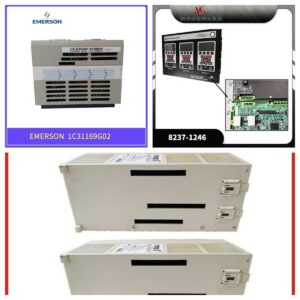
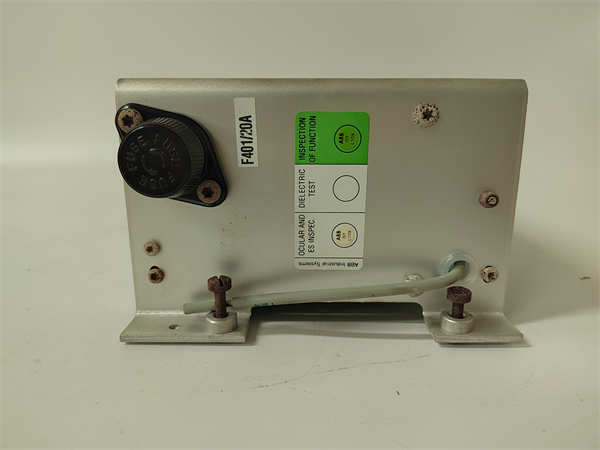
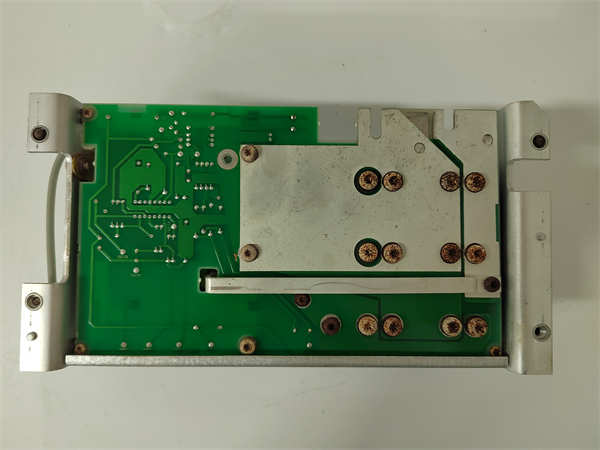
ABB DSSR122 48990001-NK
Lifecycle Status & Migration Strategy
ABB has discontinued the DSSR122 (48990001-NK) with no direct replacement in current AC 800M portfolios. Newer systems favor solid-state digital outputs (e.g., DSQCxxxx series) or remote I/O with Ethernet for reduced maintenance.
However, solid-state modules cannot directly switch AC loads or provide true galvanic isolation per channel, making migration non-trivial.
Short-Term Mitigation:
- Maintain tested spares with matching firmware/baseplate compatibility
- Archive termination block layouts and wiring diagrams
- Avoid mixing DSSR122 batches—relay characteristics may vary slightly
Long-Term Migration Options:
- Replace with Solid-State DO + External Relays
- Use modern DO modules (e.g., DSAI146) to drive panel-mounted industrial relays (e.g., Phoenix Contact, Omron)
- Preserves AC switching capability while leveraging newer I/O architecture
- Upgrade to S800 I/O Platform
- Transition to S800 I/O with DO810/DO811 modules and external relay packs
- Enables remote I/O, better diagnostics, and PROFINET/Ethernet integration
- Hybrid Approach for Safety Loops
- For SIL-rated functions, consider dedicated safety relays or Triconex/SIS solutions instead of general-purpose DO