 Tel:
Tel:  Email:
  WhatsApp:
 Description
Technical Specifications (For Spare Parts Verification)
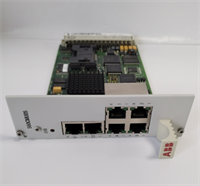
- Product Model: DSSB-01C
- Manufacturer: ABB (Power Generation Systems division)
- System Family: ABB EX2100 / EX5100 Static Excitation Systems
- Board Type: Plug-in I/O and logic module (not standalone)
- Primary Functions: Voltage/frequency comparison, slip frequency calculation, synchroscope signal generation, breaker close enable logic
- Input Signals: Generator and bus PT secondary voltages (typically 120 VAC or scaled down via interface transformers)
- Output Signals: Closing pulse to master control relay, sync OK status to DCS or protection relays
- Communication Interface: Backplane connection to main EX2100 controller (e.g., PSCA or PSCB boards)
- Diagnostic Features: LED indicators for power, sync OK, and fault conditions
- Mounting: Vertical card cage slot within EX2100 cabinet
- Firmware Dependency: Must match revision level of system firmware; mismatch can cause logic errors or communication faults
System Role and Downtime Impact
The ABB DSSB-01C is a mission-critical board within the EX2100/EX5100 excitation control architecture, primarily deployed in thermal, hydro, and combined-cycle power plants. It ensures that a generator is only connected to the grid when voltage magnitude, frequency, and phase angle are within tight tolerances—preventing mechanical stress, electrical transients, and potential damage to the generator, transformer, or grid infrastructure. During startup or after a trip, operators rely on this board’s outputs to execute safe synchronization. If the DSSB-01C fails or provides erroneous data, the synchronization sequence cannot proceed, forcing manual override (which is often prohibited by utility regulations) or extended downtime. In black-start scenarios, this single board can become the bottleneck for restoring plant or grid power.
Reliability Analysis and Common Failure Modes
Although housed in controlled environments, the DSSB-01C is susceptible to several reliability challenges due to its age and analog-digital hybrid design. The most common failure mode is degradation of precision analog components (e.g., operational amplifiers, voltage references, and isolation amplifiers) used in the voltage and phase comparison circuits, leading to drift in sync window thresholds or false “sync OK” signals. A second frequent issue is corrosion or oxidation on edge connectors, causing intermittent communication with the backplane and triggering spurious faults. Additionally, electrolytic capacitors on the power regulation section can dry out over time, resulting in unstable internal supply rails and erratic digital logic behavior.
Recommended maintenance includes periodic functional testing using simulated generator/bus waveforms, visual inspection of board surfaces for discoloration or capacitor bulging, and cleaning of card-edge contacts with electronic-grade contact cleaner. Boards installed in cabinets with poor airflow or high ambient temperatures should be prioritized for proactive replacement.
Lifecycle Status and Migration Strategy
ABB has officially discontinued the DSSB-01C as part of the broader obsolescence of the EX2100 platform. No direct replacement is available, and official repair services are limited to legacy support contracts. New-unit procurement is virtually impossible; remaining units are sourced from retired plants and carry high risk of latent defects.
As an interim measure, facilities may retain tested spares, implement enhanced diagnostics (e.g., external sync verification relays), or engage specialized third-party repair firms capable of component-level restoration. However, these are temporary solutions with diminishing returns.
ABB’s strategic migration path is a full upgrade to the EX2100e or UNI-EX excitation platform, which integrates modern synchronization functions into software-configurable controllers with Ethernet-based monitoring and compliance with IEEE C37.117 standards. This transition requires replacement of the entire control chassis but preserves existing power components (thyristor bridges, PTs, CTs). Engineering support—including factory acceptance testing and commissioning—is essential to ensure grid code compliance and seamless integration with existing DCS or protection systems. Given the critical nature of synchronization, planning this migration during scheduled outages is strongly advised to avoid forced operational compromises.