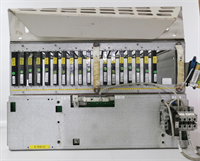
 Tel:
Tel:  Email:
  WhatsApp:
 Description
Key Technical Specifications (For Spare Parts Verification)
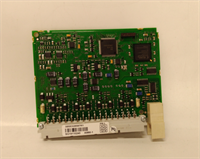
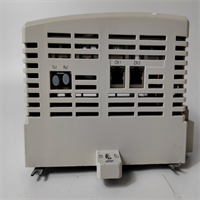
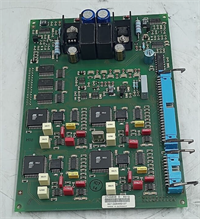
- Product Model: DSRF182AK02
- Manufacturer: ABB
- Order Number: 3BSE014078R1
- System Family: AC 800M Distributed Control System
- Baseplate Type: Dual-module redundant I/O carrier (supports two identical I/O modules for 1:1 redundancy)
- Supported Modules: Compatible with S800 I/O series (e.g., AI810, DI810, DO810) in redundant pairs
- Backplane Interface: Connects to AC 800M rack power and communication bus via DIN 41612 connectors
- Mechanical Design: Vertical orientation, occupies one logical slot group but physically spans space for two modules
- Redundancy Support: Enables hot-swap and automatic failover between primary and backup I/O modules
- Diagnostic Features: Module presence detection, power status signaling to controller
- Required Rack: AC 800M I/O chassis (e.g., with TB820V2 or equivalent backplane)
System Role and Downtime Impact
The DSRF182AK02 is a critical mechanical and electrical interface component in redundant AC 800M I/O configurations, commonly deployed in power plants, oil & gas facilities, and water treatment systems requiring high availability. It allows two identical I/O modules (e.g., analog inputs) to be mounted side-by-side, enabling seamless failover if one module fails. The baseplate itself contains no active electronics but provides the precision-machined guide rails, power distribution, and high-density backplane contacts necessary for reliable module operation.
If this baseplate is damaged—through bent pins, cracked housing, or worn retention clips—it can prevent proper module seating, leading to intermittent signal loss or complete communication dropout. In a redundant setup, this may cause both channels to fail simultaneously, defeating the purpose of redundancy. Since the DSRF182AK02 is not field-repairable, any physical defect necessitates replacement. Without a compatible spare, the system may be forced to operate in non-redundant mode, increasing vulnerability to unplanned outages during maintenance or module failure.
Reliability Analysis and Common Failure Modes
Although passive in function, the DSRF182AK02 is subject to mechanical and environmental degradation over time. The most frequent issues include:
- Backplane connector pin deformation: Repeated module insertion/removal can bend or fatigue the spring-loaded contacts, causing poor electrical connection—especially in high-vibration environments.
- Plastic housing cracking: Thermal cycling or mishandling during maintenance can fracture the structural frame, compromising module alignment.
- Corrosion on contact surfaces: In humid or corrosive atmospheres (e.g., coastal plants), oxidation on copper traces increases contact resistance, leading to voltage drops or signal noise.
- Worn module latching mechanism: The plastic retention clips that secure I/O modules can become brittle with age, failing to hold modules firmly in place.
A key vulnerability is the lack of diagnostics: the system may report “module missing” or “communication error,” but the root cause—baseplate damage—is often misdiagnosed as a faulty I/O card. This leads to unnecessary module replacements and extended downtime.
Recommended preventive actions:
- Inspect baseplate connectors annually using a borescope or magnifier for bent pins or debris.
- Clean contact surfaces with approved electronic contact cleaner during scheduled outages.
- Handle with anti-static wrist straps and avoid forcing modules during installation.
- Store spare baseplates in static-shielded packaging with desiccant to prevent moisture absorption.
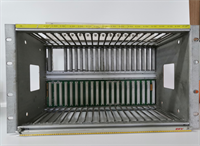
ABB DSRF182AK02 3BSE014078R1
Lifecycle Status and Migration Strategy
ABB has discontinued the DSRF182AK02 (3BSE014078R1) and replaced it with updated baseplate designs in later AC 800M hardware generations (e.g., DSRF182AK03 or newer form factors). Official support is limited to legacy documentation, and no new units are available from ABB.
Continued reliance on this baseplate carries significant risk: authentic spares are scarce, and used units may have hidden mechanical wear. Counterfeit or misrepresented parts occasionally appear on the gray market.
Short-term mitigation includes:
- Sourcing and visually/mechanically inspecting surplus baseplates from certified vendors.
- Verifying compatibility with existing I/O modules and rack backplanes before installation.
- Maintaining a “golden sample” for comparison during incoming inspection.
Long-term, ABB recommends migrating to current AC 800M hardware platforms, which use standardized, more robust baseplates with improved connector life and diagnostic capabilities. This typically involves:
- Upgrading the entire I/O chassis or backplane assembly.
- Replacing older I/O modules with current-generation equivalents (e.g., AI810 to AI811).
- Validating redundancy logic in Control Builder M after hardware changes.
While full migration requires capital investment, it eliminates dependency on obsolete mechanical components and restores access to vendor support, spare parts, and future cybersecurity updates. For facilities with extended operational lifespans, prioritizing baseplate spares for the most critical redundant loops is a pragmatic interim strategy.