 Tel:
Tel:  Email:
  WhatsApp:
 Description
Product Introduction
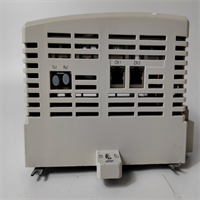
Finding a replacement for the ABB DS303 A7A01LXA002XN often happens at 2 a.m. when a critical extruder or winder stops because the old converter threw an unresettable fault. This unit serves as the power stage in older ABB DC drive systems, handling up to 500 amps of continuous current with precise armature voltage regulation. It is not a generic VFD; it is specifically engineered for DC motor applications requiring four-quadrant operation and high dynamic response.Why keep this specific model in buffer stock? Because retrofitting a modern drive into a 1990s control panel often requires rewiring the entire cabinet and reprogramming the PLC logic. The DS303 A7A01LXA002XN drops directly into existing SDCS backplanes, preserving your original wiring diagrams and parameter sets. While newer DCS880 units exist, they lack the direct mechanical compatibility without expensive adapter kits. Honestly, the lead time for a custom engineering retrofit often exceeds three weeks, whereas swapping this module takes under two hours if you have one on the shelf.
 Key Technical Specifications
 Key Technical Specifications
| Parameter | Value |
|---|---|
| Input Voltage | 3-phase AC 230V – 500V ±10% |
| Output Current (Rated) | 500 A (Continuous @ 40°C ambient) |
| Output Voltage | DC 0 – 500V (Adjustable via potentiometer or digital ref) |
| Control Method | Dual-loop (Current & Speed/Tension) |
| Quadrant Operation | 4-Quadrant (Regenerative braking capable) |
| Cooling Method | Forced Air (External fan required) |
| Protection Class | IP20 (Panel mount only) |
| Communication | SDCS Bus (Native), optional Fieldbus adapters |
| Firing Circuit | Thyristor based (SCR) |
| Dimensions (HxWxD) | Approx. 600mm x 300mm x 250mm (Varies by chassis) |
| Weight | ~28 kg |
| Standards Compliance | EN 61800-5-1, UL 508C |
Application Scenarios & Pain Points
The moment this module pays for itself is when a paper machine’s main drive trips on “Phase Loss” during a high-speed run. Without a spare, the line stays down for days waiting for a technician to source a discontinued part. With a DS303 A7A01LXA002XN in the crib, maintenance swaps the faulty thyristor bridge or entire power section, resets the fault, and resumes production before the shift change. Downtime costs in continuous process industries often exceed 10,000 per hour; a 3,000 spare part is cheap insurance.
- Petrochemical Refining: Used in crude oil pump drives where constant torque is vital. If the drive fails, flow rates drop, potentially causing pipeline pressure issues upstream.
- Steel Rolling Mills: Controls tension in coilers. Can this unit handle the rapid reversal loads? Yes, its 4-quadrant design manages regenerative energy from decelerating heavy reels without dumping resistors.
- Mining Hoists: Essential for shaft elevators requiring precise speed control at low RPMs. Failure here isn’t just costly; it’s a safety incident waiting to happen.
- Marine Propulsion: Older electric tugboats rely on these for thruster control. Salt air corrosion is the enemy here—did you check the conformal coating on your spares?
- Rubber Extrusion: Maintains consistent screw speed for material homogeneity. A speed ripple of even 1% can ruin a batch of tire tread.
Field Case Note:
A packaging plant in Ohio faced a recurring “Overcurrent” fault on their primary winder. The external contractor suggested replacing the whole cabinet (45k, 8-week lead time). The in-house engineer pulled a spare DS303 A7A01LXA002XN from inventory, swapped it in 90 minutes, and traced the root cause to a failing tachometer generator, not the drive itself. Total cost: 0 for the swap (spare was already owned) + 200 for the sensor. The alternative would have been a 120,000 loss in production.
Quality Control Process (SOP Transparency)
We don’t just box these up and hope for the best. Every DS303 A7A01LXA002XN undergoes a rigorous bench test before it leaves our facility.
- Inbound Inspection: We verify the serial number against ABB’s legacy database to confirm manufacture date. Visual checks look for burnt PCB traces, swollen capacitors, or corrosion on the heatsink fins. We also verify that the original terminal covers and mounting hardware are present.
- Live Functional Test: The unit is mounted in a test rack simulating an SDCS backplane. We apply a reduced control voltage first to check logic board boot-up. Then, we ramp up the AC input to 480V while monitoring the DC bus.
- Electrical Parameters: Using a Fluke 87V multimeter and a Megger MIT420, we measure insulation resistance between phases and ground (>10 MΩ required). We perform a hi-pot test at 2.5kV for 60 seconds to ensure dielectric strength.
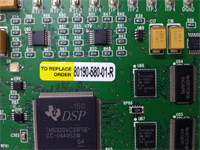
- Firmware Verification: We read the EPROM version codes. Since this is a legacy analog/digital hybrid, we check the calibration pots for “dead spots” where resistance jumps erratically.
- Final QC & Packaging: After a 4-hour load test at 50% rated current, we log temperature rise on the thyristors. If stable, the unit is bagged in anti-static wrap, cushioned with high-density foam, and labeled with the test date and technician ID. We can share video of the test run upon request.
Installation Pitfalls Guide (“Lessons Learned” Voice)
I’ve seen perfectly good drives smoke within seconds of installation because someone skipped the basics. Don’t let that be you.
- Firmware/Calibration Mismatch: Even though this is an older drive, the internal calibration pots drift over 20 years. ❗Do not assume the factory settings match your motor. You must perform a manual armature current calibration (Arm I Ref) after installation. Skipping this causes torque ripple or overheating.
- DIP Switch / Jumper Misconfiguration: The SDCS backplane uses jumpers to define field weakening points and voltage ranges. Take a photo of the old unit’s jumper settings before you pull a single wire. Factory defaults on a replacement DS303 A7A01LXA002XN rarely match a site-specific application.
- Terminal / Wiring Incompatibility: Check the phase rotation. Reversing two input phases on a thyristor bridge won’t just fail to start; it can cause a direct short across the DC bus when fired. Use a phase rotation meter before closing the breaker.
- Power Supply Undersizing: The control electronics draw power from the main bus, but the cooling fans often need a separate 110V or 24V source. If you daisy-chain the fan power from an overloaded auxiliary supply, the drive will overheat and trip on thermal fault within minutes. Calculate the total rack load with 20% headroom.
- ESD Damage: The control boards in these legacy units are sensitive. I once saw a technician touch the ribbon cable connector without a wrist strap, and the firing pulse board died instantly. Always wear an ESD strap grounded to the cabinet frame when handling the module.