 Tel:
Tel:  Email:
  WhatsApp:
 Description
Key Technical Specifications (For Spare Part Verification)
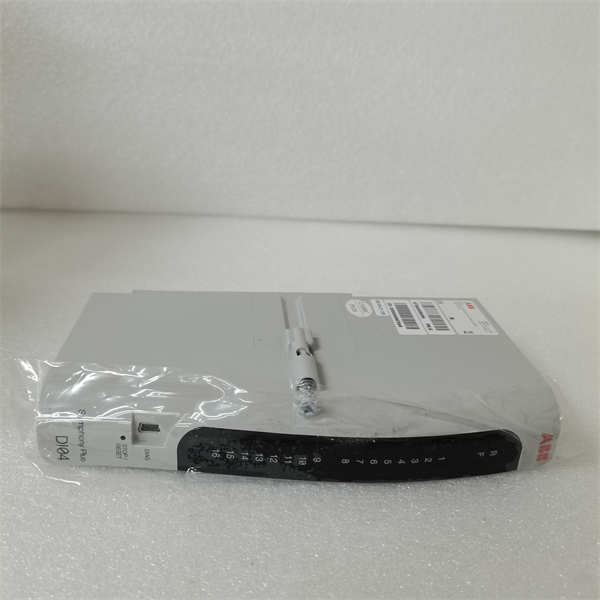
- Product Model: DI04
- Manufacturer: ABB
- System Family: AC 800M (part of the 800xA distributed control system)
- Input Channels: 16 isolated digital inputs
- Input Voltage Range: Typically 24 V DC (nominal), with wide tolerance (e.g., 15–30 V DC)
- Input Type: Sinking or sourcing configurable via terminal wiring
- Isolation: Group isolation (typically 4 channels per group) with >500 V channel-to-bus isolation
- Response Time: <1 ms per channel
- Diagnostics: LED indicator per channel; diagnostic data accessible via Control Builder M
- Mounting: DIN rail or rack-mounted within AC 800M I/O station
- Power: Supplied via backplane from redundant system power supplies
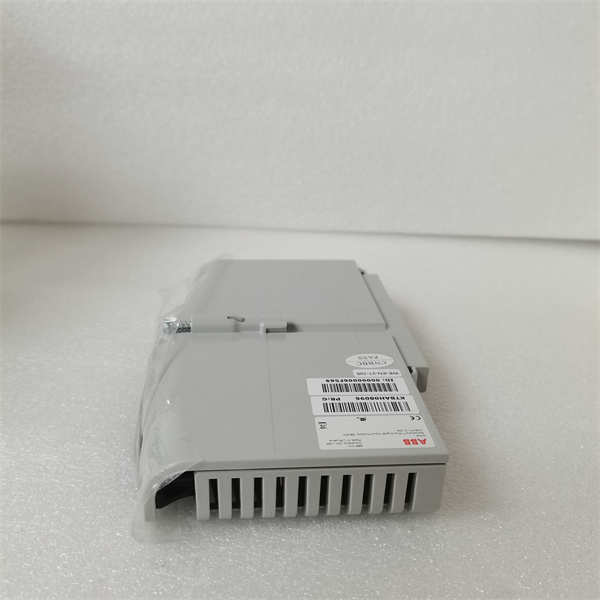
ABB DI04
System Role and Downtime Impact
The DI04 is a fundamental component in legacy ABB 800xA systems across industries such as power generation, mining, and chemical processing. It captures discrete status signals—such as motor running feedback, valve position confirmation, or emergency stop activation—and relays them to the AC 800M controller for logic execution, alarming, and safety interlocks. While individual digital inputs may seem low-risk, the DI04 often aggregates signals from safety-critical devices. A failed module can result in “stuck” or missing signals, leading to undetected equipment faults, bypassed interlocks, or false trip conditions. In non-redundant I/O architectures, loss of one DI04 can compromise multiple protection functions simultaneously, potentially causing unplanned shutdowns or hazardous operational states.
Reliability Analysis and Common Failure Modes
Despite rugged construction, aging DI04 modules show consistent degradation trends after prolonged service:
- Input optocoupler failure: The primary isolation component degrades due to cumulative current stress or voltage spikes, causing channels to become unresponsive.
- Terminal block corrosion: Moisture or chemical exposure oxidizes screw terminals, increasing contact resistance and leading to intermittent signal loss.
- Backplane connector wear: Repeated thermal cycling causes micro-fretting in edge connectors, resulting in intermittent communication with the CPU.
- Power filtering capacitor aging: Electrolytic capacitors on the module’s internal power rail dry out, causing noise-induced glitches or reset behavior.
- Wiring-induced damage: Incorrect field wiring (e.g., AC voltage applied to DC input) can destroy input protection circuits without visible signs.
A design limitation is the absence of per-channel short-circuit protection in early revisions, making the module vulnerable to field-side faults. Preventive maintenance should include:
- Periodic functional testing using simulated dry-contact closures
- Inspection of terminal torque and signs of arcing or discoloration
- Verification of input voltage levels under load conditions
- Storage of verified spares in ESD-safe, climate-controlled environments
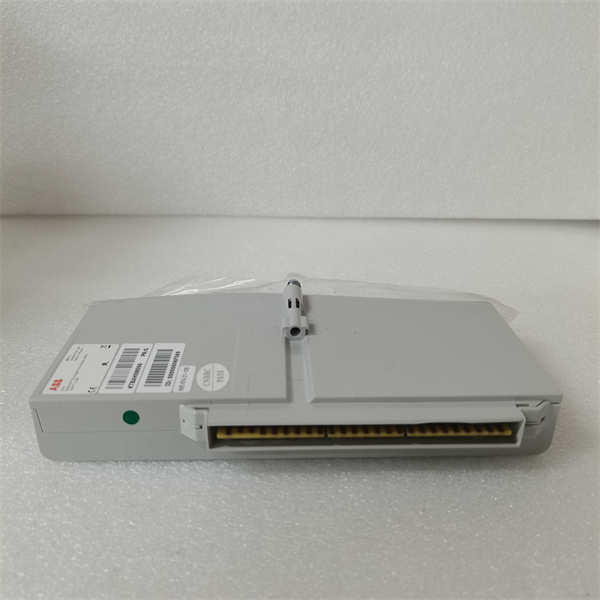
ABB DI04
Lifecycle Status and Migration Strategy
ABB has formally discontinued the DI04 as part of the evolution of its AC 800M I/O portfolio. No new production, factory repair, or engineering support is available. Continued use carries significant risk: diminishing spare availability, lack of compatibility with modern engineering tools, and increasing difficulty in troubleshooting due to knowledge attrition.
Short-term mitigation includes sourcing tested-used units from reputable industrial surplus suppliers or utilizing third-party services that offer board-level repair with post-repair validation.
The strategic migration path is to replace the DI04 with ABB’s current-generation DI810 or DI811 digital input modules, which offer enhanced diagnostics, improved noise immunity, and full compatibility with modern 800xA system platforms (including cybersecurity features). Migration typically involves:
- Replacing the module and verifying terminal wiring compatibility (pinout may differ)
- Updating the hardware configuration in Control Builder M
- Re-validating associated logic and alarm sequences