 Tel:
Tel:  Email:
  WhatsApp:
 Description
Key Technical Specifications (For Spare Parts Verification)
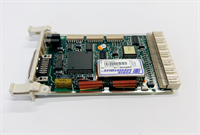
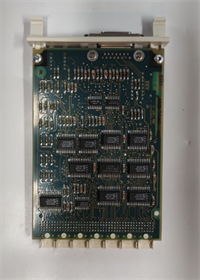
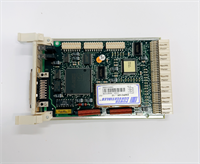
- Product Model: CS513 3BSE000435R1
- Manufacturer: ABB
- System Platform: ABB AC 800M within System 800xA architecture
- Module Type: Communication Interface (Serial)
- Interfaces Provided: 1x RS-232 (DB9), 1x RS-422 (Screw terminals)
- Baud Rate Support: Up to 115.2 kbps
- Installation Slot: Requires CI801 or CI840 communication base unit in AC 800M rack
- Power Consumption: Approx. 2 W (supplied via backplane)
- Firmware Dependency: Compatible with AC 800M firmware versions up to v5.1 SP2; not supported in v6.0+
- Physical Dimensions: Standard AC 800M module size (fits TB85x baseplates)
System Role and Operational Impact
The CS513 3BSE000435R1 serves as a critical serial gateway in legacy ABB AC 800M systems. It is typically installed in control rooms or local racks to provide direct engineering access for initial commissioning, firmware updates, or emergency diagnostics when network connectivity is unavailable. In many older installations—particularly in power generation, water treatment, and industrial facilities—it remains the only physical interface to the controller. If this module fails, operators may lose the ability to upload programs, retrieve diagnostic logs, or connect to legacy printers or modems. While it does not directly control I/O, its absence can severely hinder troubleshooting during outages, potentially extending downtime from hours to days.
Reliability Analysis and Common Failure Modes
Despite its solid-state design, the CS513 is susceptible to several age-related failure mechanisms. The most common issue is degradation of the RS-232/422 transceiver ICs due to repeated electrostatic discharge (ESD) events during cable handling—especially in dry climates or non-grounded environments. Over time, the DB9 connector’s solder joints can crack from mechanical stress, leading to intermittent communication. Although the module itself contains no battery or moving parts, it relies on stable +5V DC from the AC 800M backplane; voltage spikes or ripple from aging power supplies can damage its internal logic circuits.
From a maintenance standpoint, technicians should routinely inspect the module for physical damage to the DB9 port, corrosion on terminal blocks, and signs of overheating (discoloration on PCB). During system audits, verify that the connected serial cables are properly shielded and grounded to minimize ESD risk. If the module is used for periodic data logging, consider implementing a scheduled functional test (e.g., monthly echo test via terminal emulator) to catch early communication degradation before a crisis occurs.
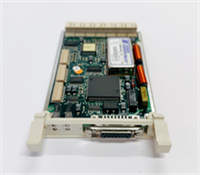
ABB CS513 3BSE000435R1
Lifecycle Status and Migration Strategy
ABB officially discontinued the CS513 3BSE000435R1 several years ago, classifying it as obsolete with no direct replacement. Continued use carries significant risk: global stock is finite, counterfeit units have appeared in secondary markets, and newer versions of Control Builder M no longer support its driver stack. Relying on this module for critical access paths is increasingly unsustainable.
As an interim measure, facilities can secure 1–2 verified spare units from trusted suppliers and store them in climate-controlled conditions. Some users implement USB-to-serial adapters on engineering laptops as a workaround—but this only works if the AC 800M CPU still responds over Ethernet, which isn’t guaranteed during boot failures.
For a long-term solution, ABB recommends migrating to modern AC 800M CPUs (e.g., PM866 or PM867) that feature integrated USB and enhanced Ethernet diagnostics, eliminating the need for dedicated serial modules. This migration requires updating the controller hardware, recompiling the application in a compatible Control Builder version, and revising network security policies. While not trivial, this path restores full engineering access while future-proofing the control system against further obsolescence risks.