 Tel:
Tel:  Email:
  WhatsApp:
 Description
Key Technical Specifications (For Spare Parts Verification)
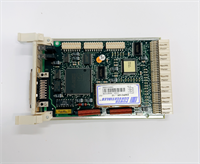
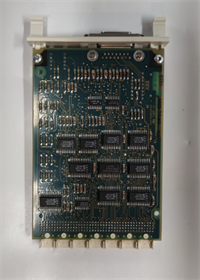
- Product Model: CS513 3BSE000435R1
- Manufacturer: ABB
- System Platform: ABB AC 800F (part of early System 800xA architecture, circa late 1990s–2000s)
- Processor Type: Motorola PowerPC-based embedded controller
- Memory: Onboard RAM and flash memory for program and configuration storage (non-expandable)
- Backplane Interface: Connects to DSCS130 or DSCS140 I/O stations via proprietary high-speed bus
- Communication Ports: Integrated MODBUS RTU (RS-485), optional PROFIBUS via add-on module
- Redundancy Support: None – single-unit architecture
- Power Requirement: +5 VDC and ±15 VDC from backplane (approx. 8 W total)
- Diagnostic Indicators: LEDs for RUN, STOP, I/O COMM, and battery status
- Battery Backup: CR2032 or similar for RAM retention during power loss (user-replaceable)
System Role and Downtime Impact
The CS513 is the central logic engine in AC 800F-based distributed control systems, commonly deployed in power generation, water/wastewater, and industrial process facilities. It executes control logic, manages I/O data exchange with remote stations, and interfaces with operator workstations via MODBUS or proprietary protocols. Because it operates as a single point of failure—without built-in redundancy—a hardware fault in the CS513 halts all automated functions. In critical infrastructure such as boiler-turbine-generator units or chemical dosing systems, this can lead to immediate safety interlocks, regulatory non-compliance, or environmental incidents. Recovery is impossible without a verified spare unit, making this module one of the highest-risk components in legacy ABB installations.
Reliability Analysis and Common Failure Modes
Despite its robust industrial design, the CS513 is subject to several age-related failure mechanisms. The most common issue is battery-backed RAM corruption due to exhausted or leaking coin-cell batteries, resulting in program loss after power cycles. Electrolytic capacitors on the internal power regulation circuit degrade over time, especially in cabinets with poor ventilation, causing voltage instability, spontaneous reboots, or failure to boot. The backplane connector pins can oxidize or bend, leading to intermittent I/O communication that mimics field device faults. Additionally, the lack of modern surge protection makes the RS-485 MODBUS port vulnerable to ground loops or transients, potentially damaging the UART controller.
Preventive maintenance should include:
- Annual replacement of the backup battery (even if voltage appears normal)
- Inspection of capacitor doming or leakage under magnification
- Cleaning of backplane contacts with contact-safe dielectric spray
- Verification of program integrity via offline backup comparison
Since the module contains custom firmware tied to project-specific configurations, functional testing requires installation in a matched AC 800F rack with known-good I/O.
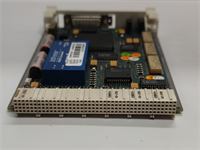
CS513 3BSE000435R1 ABB
Lifecycle Status and Migration Strategy
ABB has long since discontinued the CS513 and the entire AC 800F platform, with official support ending years ago. No new units are manufactured, and ABB does not offer repair or reconditioning services. Continuing to operate systems dependent on this CPU carries severe risk: spares are scarce, pricing exceeds original cost by 3–5x, and counterfeit or improperly stored units may fail shortly after installation.
Short-term mitigation includes maintaining at least two fully tested CS513 modules—one installed, one hot spare—and ensuring up-to-date offline backups of application code and configuration. However, this only delays inevitable obsolescence.
ABB’s strategic migration path is a full transition to the AC 800M platform, using CPUs such as the PM864 (3BSE022360R1) or PM866 (3BSE022361R1). This upgrade requires:
- Replacement of the entire controller rack with AC 800M-compatible hardware
- Rewiring of I/O to new terminal bases (e.g., TB840/TB850)
- Conversion of AC 800F control logic (typically in Function Chart or IL) to AC 800M-compatible code in Control Builder M (structured text or FBD)
- Recommissioning of all control loops and communication interfaces
While this demands significant engineering effort, it restores access to cybersecurity updates, modern diagnostics, and long-term vendor support. For facilities unable to fund full migration immediately, engaging a third-party integrator to perform hardware emulation or logic extraction can preserve operational continuity while planning phased replacement. Until then, the CS513 remains a high-consequence single point of failure requiring proactive spare management.