 Tel:
Tel:  Email:
  WhatsApp:
 Description
Technical Specifications (For Spare Parts Verification)
- Product Model: CI541V1
- ABB Order Code: 3BSE014666R1
- Manufacturer: ABB
- Associated System: ABB AC 800M Controller within Industrial IT 800xA DCS
- Input Channels: 4 differential, galvanically isolated
- Signal Range: 0–20 mA or 4–20 mA (software-configurable per channel)
- Input Impedance: ≤ 250 Ω
- Isolation: 500 VAC between channels and backplane
- Accuracy: ±0.1% of full scale at 25°C
- Update Rate: ~100 ms per module
- Backplane Interface: S800 I/O bus (via TB541 terminal base)
- Diagnostics: Basic open-circuit detection only (no HART or advanced alerts)
- Operating Temperature: 0°C to +60°C
System Role and Downtime Impact
The CI541V1 is typically deployed in critical process areas—such as boiler feedwater control in power plants, reactor temperature monitoring in chemical facilities, or compressor surge protection in oil & gas—where reliable analog signal acquisition is essential for safe and stable operation. It converts 4–20 mA signals from field transmitters into digital values used by the AC 800M controller for regulatory control, interlocks, or alarms. If this module fails (e.g., due to internal component drift, power surge, or terminal corrosion), it may output frozen, zero, or erratic values. This can trigger false alarms, cause control loops to diverge, or—worst case—disable safety shutdown logic. In a nuclear auxiliary system or ethylene cracker, such a failure could lead to forced derating, unplanned shutdown, or regulatory investigation.
Reliability Analysis and Common Failure Modes
Despite its robust design, the CI541V1 exhibits predictable aging patterns. The most common failure is input circuit drift due to aging precision resistors or op-amps, leading to measurement offsets that exceed calibration tolerance. A second frequent issue is open-circuit detection malfunction, where the module fails to flag a broken wire, allowing undetected sensor loss. Additionally, the terminal base (TB541) often suffers from corrosion or loose screw terminals, especially in high-humidity or corrosive environments, causing intermittent signal loss misattributed to the module itself.
A key limitation is the absence of advanced diagnostics—unlike modern CI864 modules, the CI541V1 cannot report loop health, HART data, or real-time error codes. Moreover, its lack of redundancy support means a single module failure directly impacts up to four critical measurements.
Recommended preventive actions include:
- Annual calibration using a precision current source and verification against known reference
- Inspection of terminal screws for torque integrity and signs of oxidation
- Monitoring for “stale” tag values in 800xA during normal operation as an early failure indicator
- Ensuring proper grounding of the I/O chassis to minimize common-mode noise
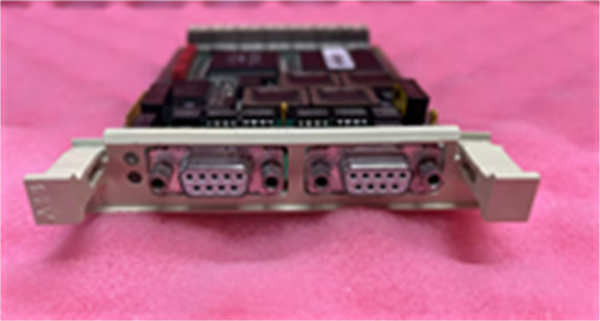
CI541V1 3BSE014666R1 ABB
Lifecycle Status and Migration Strategy
ABB discontinued the CI541V1 in favor of the S800 I/O platform’s next-generation modules (e.g., CI854A, CI864), which offer 8 channels per module, HART transparent access, enhanced diagnostics, and support for redundant configurations. No factory repair or recalibration services are available for the CI541V1 beyond basic third-party testing.
For sites maintaining legacy 800xA systems, two interim strategies are viable:
- Strategic sparing: Acquire multiple verified working CI541V1 modules now to cover remaining operational life.
- Hybrid I/O integration: Replace failed CI541V1 units with CI854A modules in the same I/O station (requires compatible baseplate and updated hardware configuration in Control Builder M).
The long-term migration path involves upgrading to the AC 800M High Availability architecture with CI864 modules, enabling predictive maintenance via 800xA Asset Optimization. While this requires re-commissioning of I/O tags and loop checks, it significantly improves reliability and reduces lifecycle costs. Given the critical role of analog inputs in process safety, delaying this obsolescence management increases operational risk—making proactive planning essential.