 Tel:
Tel:  Email:
  WhatsApp:
 Description
Key Technical Specifications (For Spare Parts Verification)
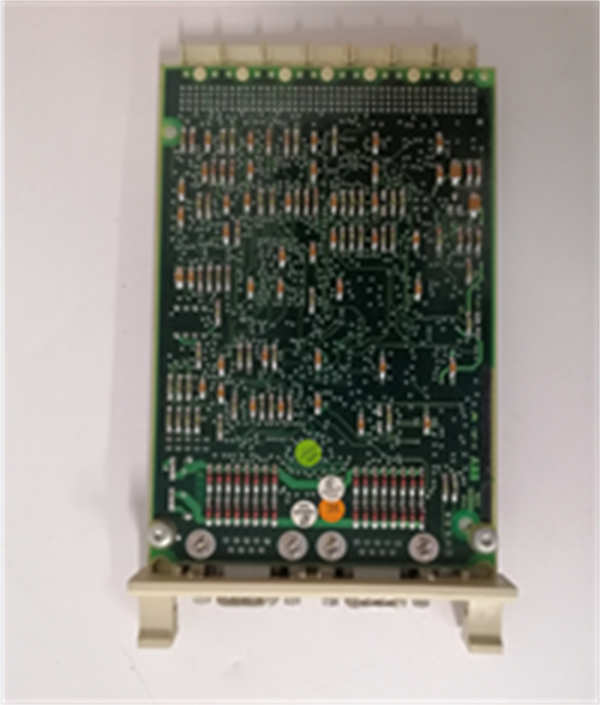
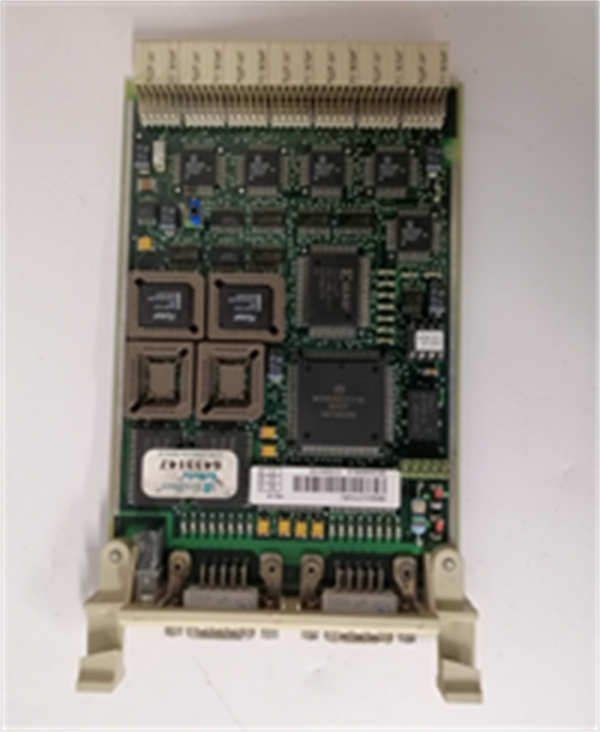
- Product Model: CI534V02
- Manufacturer: ABB
- Order Code: 3BSE010700R1
- System Platform: AC 800M (integrated in 800xA Process Automation System)
- Communication Standard: PROFIBUS DP (IEC 61158-2)
- Operating Modes: Configurable as PROFIBUS DP Master or Slave via Control Builder M
- Data Rate: Up to 12 Mbps (software-selectable)
- Max. Connected Slaves: 126 (per PROFIBUS standard)
- Redundancy Support: Limited – requires careful configuration; not natively synchronized like later modules
- Backplane Interface: Compatible with early AC 800M baseplates (e.g., CI801, CI854)
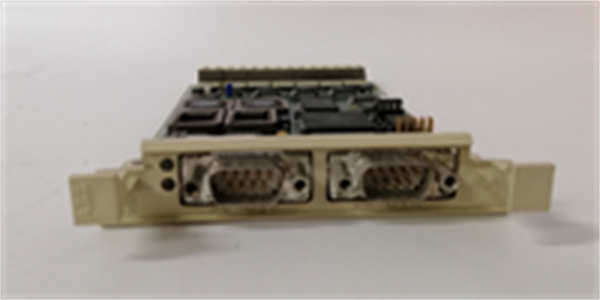
- Physical Port: 9-pin SUB-D (RS-485), isolated
- Diagnostic Indicators: LEDs for Power, RUN, and BF (Bus Fault)
- Firmware Dependency: Tied to early Control Builder M versions (typically 2.x–3.x)
System Role and Downtime Impact
The CI534V02 serves as a critical fieldbus gateway in legacy AC 800M systems, connecting the controller to distributed I/O stations (e.g., ET200M), variable frequency drives (VFDs), smart positioners, and other PROFIBUS-enabled devices. In many brownfield installations—especially in power, water, and mining—it remains the backbone of field-level communication.
If the CI534V02 fails, all PROFIBUS-connected devices become unreachable, causing loss of analog inputs, digital feedback, and control output capability for those devices. While hardwired I/O may continue to function, any loop dependent on PROFIBUS data will freeze or fail safe. In continuous processes, this often triggers alarms, interlocks, or partial shutdowns. Recovery requires hardware replacement and re-downloading of the communication configuration—a process that can take 1–2 hours if backups are current and engineering access is available.
Reliability Analysis and Common Failure Modes
The CI534V02, while robust for its era, exhibits well-documented failure patterns due to aging and electrical stress. The most common issue is failure of the RS-485 transceiver circuitry, typically caused by:
- Ground potential differences between cabinets
- Lightning-induced surges on long trunk cables
- Missing or degraded termination/bias resistors
These failures often manifest as intermittent “Bus Fault” (BF LED flashing) before complete communication loss. Unlike newer modules, the CI534V02 has limited diagnostic granularity, making root-cause analysis difficult without external bus analyzers.
Additional risks include:
- Firmware version mismatches with the AC 800M CPU, leading to initialization failures
- Connector corrosion on the SUB-D port in humid environments
- Capacitor aging on internal power regulation circuits, causing voltage instability
Recommended preventive actions:
- Inspect PROFIBUS cabling annually—verify shielding continuity, single-point grounding, and termination resistance (110–120 Ω).
- Monitor the BF diagnostic bit in 800xA for early signs of bus instability.
- Maintain consistent firmware versions across CPU and communication modules.
- Use conformal coating or protective boots on connectors in harsh environments.
Proactive bus monitoring with a PROFIBUS tester can detect signal reflections or attenuation before failure occurs.
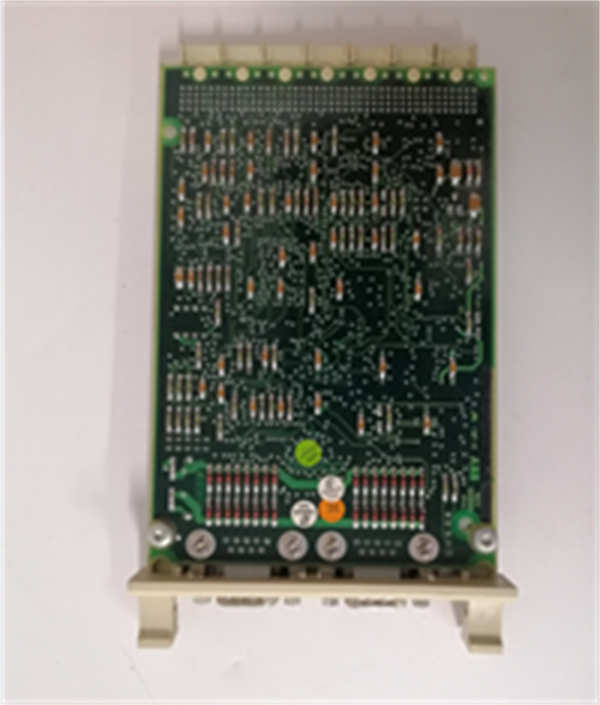
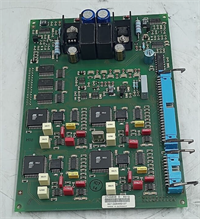
ABB CI534V02 3BSE010700R1
Lifecycle Status and Migration Strategy
ABB discontinued the CI534V02 nearly a decade ago, and support has been fully withdrawn. Continuing to operate systems dependent on it exposes facilities to significant risk: spare parts are vanishing, expertise is retiring, and cybersecurity vulnerabilities in legacy protocol stacks cannot be patched.
As a short-term mitigation, organizations may acquire tested NOS units from reputable industrial automation resellers, but each must undergo full functional validation—including max-slave load testing and redundancy checks—before installation.
ABB’s official migration path is to replace the CI534V02 with the CI535V30 (now also discontinued but with longer support) or, preferably, transition to Ethernet-based field networks using the CI854A/B modules with PROFINET IO. This modernization requires:
- Replacing PROFIBUS slaves with PROFINET equivalents, or
- Deploying PROFINET-to-PROFIBUS gateways (e.g., ABB TB5xx series or third-party solutions) for legacy devices
- Updating the Control Builder M project to use Ethernet-based communication objects
For sites with extensive PROFIBUS infrastructure, a hybrid approach—using gateways for non-critical devices while migrating core loops to PROFINET—offers a pragmatic balance between cost and risk reduction. Ultimately, eliminating dependence on obsolete serial fieldbuses enhances system resilience, simplifies troubleshooting, and aligns with modern OT security frameworks.