 Tel:
Tel:  Email:
  WhatsApp:
 Description
Key Technical Specifications (For Spare Parts Verification)
- Product Model: CI522A
- Order Number: 3BSE018283R1
- Manufacturer: ABB
- System Compatibility: Advant Controller 400 (AC 400), early Industrial IT 800xA (pre-v5.0)
- Module Type: Communication interface card (plug-in)
- Channels: 2 independent serial ports
- Interfaces: Software-selectable RS-232 or RS-485 per channel
- Data Rate: Up to 115.2 kbps
- Protocol Support: Modbus RTU, Allen-Bradley DF1, Siemens 3964R, and custom ASCII protocols
- Power: Supplied via backplane (no external power required)
- Mounting: Standard DIN rail or rack-mounted in AC 400 I/O chassis
- Indicators: LED status per channel (TX, RX, Fault)
System Role and Downtime Impact
The CI522A typically resides in an AC 400 controller rack or an early 800xA connectivity server cabinet, acting as a bridge between the central automation system and critical auxiliary equipment—such as gas chromatographs in refineries, flow computers in custody transfer stations, or legacy boiler controls in power plants. If this module fails, real-time data from these devices is lost. In continuous processes, this can lead to suboptimal control, regulatory reporting gaps, or even forced derating of the main process. Since many of these connections are non-redundant in legacy installations, a single CI522A failure can degrade overall system integrity and trigger operational alarms that require immediate attention. Recovery depends entirely on spare availability, often extending downtime beyond 24 hours in remote facilities.
Reliability Analysis and Common Failure Modes
The CI522A is generally robust but susceptible to long-term wear in industrial environments. The most common failure mode is RS-485 transceiver IC degradation, often caused by repeated exposure to ground potential differences or induced surges from long field cables. This manifests as intermittent communication errors, CRC failures, or complete port lockup.
Internally, electrolytic capacitors on the power regulation circuit can dry out after 10–15 years of service, leading to voltage instability and spontaneous resets. The module also lacks modern isolation standards—its optocouplers provide basic separation but are vulnerable to cumulative ESD events over time.
Maintenance best practices include: inspecting field cable shielding and grounding at both ends, verifying baud rate and parity settings match device requirements, monitoring communication error counters in the control software, and performing annual functional tests by simulating device traffic. Any unit showing erratic TX/RX LED behavior should be replaced proactively. Spares should be stored in anti-static packaging with humidity control to preserve semiconductor integrity.
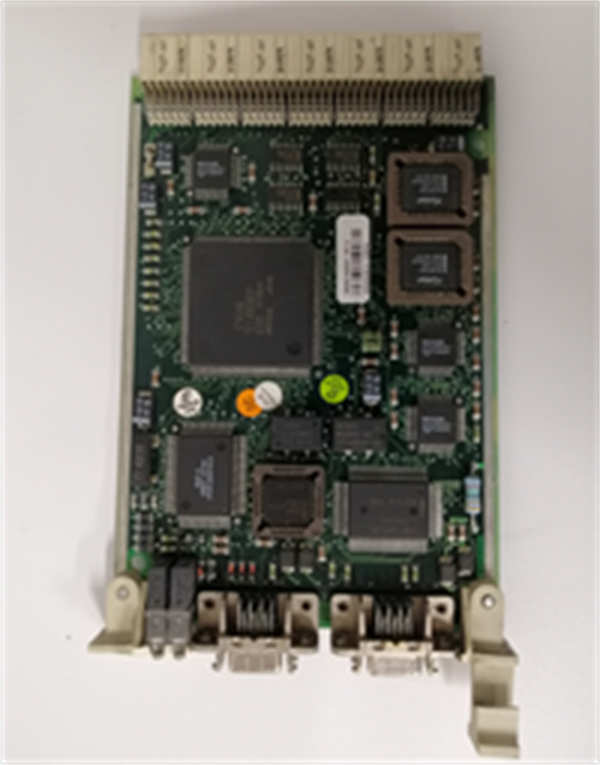
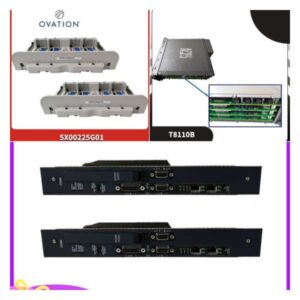
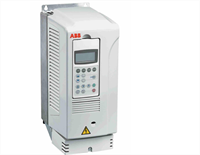
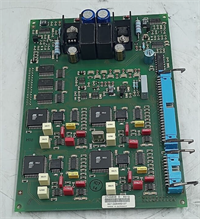
CI522A 3BSE018283R1 ABB
Lifecycle Status and Migration Strategy
ABB no longer supports the CI522A, and it is incompatible with 800xA versions beyond v5.1 without extensive workarounds. Continued use carries increasing risk: no firmware updates, no diagnostic integration with modern Asset Optimization tools, and growing difficulty in troubleshooting due to obsolete protocol stacks.
Short-term mitigation includes sourcing and functionally validating surplus units, or using external USB-to-RS485 converters with OPC DA wrappers—but these introduce single points of failure and cybersecurity concerns.
The recommended migration path is to replace the CI522A with the ABB CI590 serial communication module (for AC 800M-based 800xA systems) or integrate a standalone protocol gateway (e.g., HMS Anybus, ProSoft MVI56) that supports Modbus TCP to RS-485 conversion with full diagnostics. This approach allows legacy devices to remain in service while connecting them via Ethernet to the modern control layer. For greenfield or major upgrade projects, migrating field devices to native PROFINET or HART-over-Ethernet eliminates the need for serial gateways altogether. ABB provides engineering services to assess legacy communication networks and develop phased migration roadmaps that minimize disruption.