 Tel:
Tel:  Email:
  WhatsApp:
 Description
Key Technical Specifications (For Spare Part Verification)
- Product Model: CAI04
- Manufacturer: ABB
- System Family: AC 800M (part of the 800xA distributed control system)
- Input Channels: 8 differential or single-ended analog inputs
- Signal Types: Configurable per channel – 4–20 mA (with open-wire detection) or 0–10 V / ±10 V
- Resolution: 16-bit A/D conversion
- Isolation: Channel-to-channel and channel-to-bus isolation (typically reinforced, >500 V)
- Update Rate: ~10 ms per module (system-dependent)
- Diagnostics: LED indicators per channel; diagnostic data accessible via Control Builder M
- Mounting: DIN rail or rack-mounted within AC 800M I/O station
- Power: Supplied via backplane from redundant power supplies
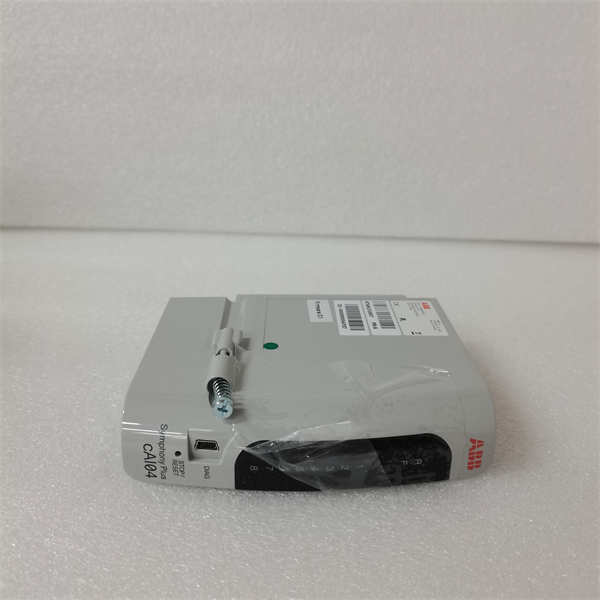
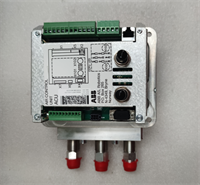
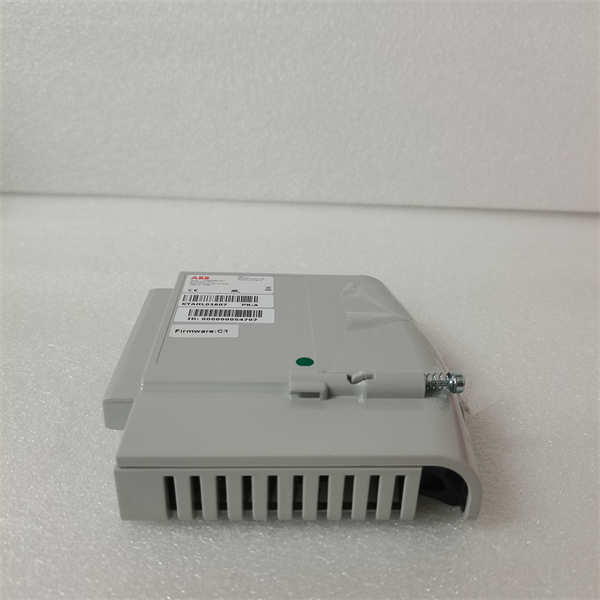
ABB CAI04
System Role and Downtime Impact
The CAI04 is a foundational I/O module in legacy ABB 800xA systems deployed across power generation, oil & gas, and heavy industry. It digitizes analog process signals from field instruments and delivers them to the AC 800M controller for real-time control, alarming, and data logging. In non-redundant I/O configurations—common in cost-optimized designs—a failed CAI04 can result in loss of multiple critical measurements simultaneously. This may trigger process trips, degrade regulatory compliance (e.g., emissions control), or, in worst cases, allow unsafe operating conditions to go undetected. Given its integration into safety-related loops in some applications, its reliability directly impacts both operational continuity and personnel safety.
Reliability Analysis and Common Failure Modes
Despite robust industrial design, aging CAI04 modules exhibit predictable degradation patterns after 10–20 years of service. The most frequent failure modes include:
- Drift in analog front-end circuitry due to aging precision resistors and reference components, causing measurement inaccuracies (e.g., 12 mA reads as 11.7 mA).
- Degradation of isolation barriers from repeated voltage transients or moisture ingress, leading to ground loops or safety hazards.
- Open-circuit failures in input protection circuits after exposure to field-side surges.
- Intermittent connectivity from backplane connector wear or cold solder joints exacerbated by thermal cycling.
- Firmware or configuration corruption during power anomalies, especially if EEPROM integrity degrades.
A key design vulnerability is reliance on precise calibration stored in non-volatile memory—once lost, recalibration requires specialized tools and downtime. Preventive maintenance should include annual loop checks using calibrated signal simulators, visual inspection of terminal blocks for corrosion, and verification of diagnostic flags in Control Builder M. Technicians must confirm that any spare matches the exact hardware revision (e.g., CAI04 Rev C) and firmware compatibility level before installation.
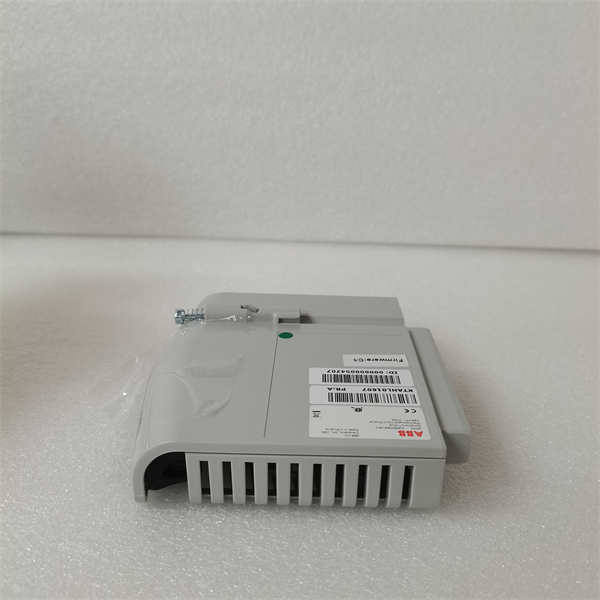
ABB CAI04
Lifecycle Status and Migration Strategy
ABB has formally discontinued the CAI04 as part of the broader phase-out of early AC 800M I/O modules. No new production, factory repairs, or long-term support are offered. Continued use introduces significant risks: diminishing spare availability, lack of cybersecurity updates, and increasing difficulty in sourcing compatible engineering workstations running legacy Control Builder M versions.
As a short-term measure, facilities may source tested-used units from certified surplus vendors or engage third-party services offering component-level repair with post-repair calibration. However, these are not sustainable.
The strategic migration path is to replace the CAI04 with ABB’s current-generation AI810 or AI815 analog input modules within the AC 800M v2/v3 architecture. These offer enhanced diagnostics, native support for IEC 61850 and OPC UA, improved noise immunity, and compatibility with modern 800xA system platforms. Migration typically involves:
- Replacing the I/O module and updating terminal wiring (pinout may differ)
- Updating the hardware configuration in Control Builder M
- Re-commissioning affected control loops