 Tel:
Tel:  Email:
  WhatsApp:
 Description
Key Technical Specifications (For Spare Part Verification)
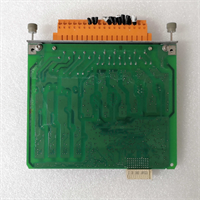
- Product Model: ACS800-IGBT
- ABB Part Number: 68569591
- Manufacturer: ABB
- Drive Family: ACS800 (Low-voltage AC drive series, typically 200–690 VAC)
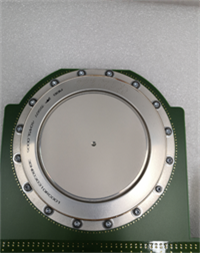
- Function: Inverter power module (IGBT stack + gate driver circuitry)
- Voltage Class: Designed for 500–690 VDC bus systems (corresponding to 400–600 VAC input)
- Current Rating: Specific to drive frame size (e.g., NXR, R8i); must match original drive rating
- Cooling Method: Air-cooled (mounted on heatsink with thermal paste interface)
- Gate Drive Integration: Includes isolated gate drivers and protection logic (desaturation detection, overcurrent shutdown)
- Mechanical Interface: Bolt-in module with standardized mounting holes and busbar connections
- Compatibility: Used in ACS800-01, -04, and certain -07 variants (frame-dependent)
System Role and Downtime Impact
The ACS800-IGBT module (68569591) is a central component in the power conversion stage of ABB’s widely deployed ACS800 drive family. It directly controls the switching of high-current pulses to the motor windings based on commands from the drive’s control board. This module enables precise speed and torque regulation in applications ranging from HVAC systems to mining conveyors. Because it handles full motor current and high switching frequencies, its failure is catastrophic: a shorted IGBT typically triggers a “SHORT CIRC” or “OVERCURRENT” fault, disabling the drive output instantly. In continuous-process industries—such as water treatment, pulp & paper, or oil & gas—this can halt fluid flow, cause pressure build-up, or trigger cascading system trips. Recovery requires not only module replacement but also verification of DC bus capacitors, pre-charge circuits, and motor insulation integrity, often leading to extended downtime.
Reliability Analysis and Common Failure Modes
Despite robust industrial design, this IGBT module is susceptible to several age- and stress-related failure mechanisms:
- Thermal cycling fatigue: Repeated heating during operation and cooling at shutdown causes micro-cracks in solder joints between the IGBT dies and substrate, increasing thermal resistance and eventually leading to thermal runaway.
- Gate driver degradation: The integrated gate driver ICs are sensitive to voltage spikes on the DC bus. Over time, repeated transient exposure degrades isolation, causing erratic switching or shoot-through faults.
- Contamination-induced arcing: Dust, metal particles, or moisture ingress in the drive cabinet can create conductive paths across high-voltage terminals, resulting in flashover and IGBT destruction.
- Inadequate thermal interface: Dried-out or improperly applied thermal paste increases junction temperature, accelerating wear and reducing safe operating area.
Preventive maintenance best practices include:
- Performing annual infrared thermography on powered drives to detect hot spots on the heatsink.
- Ensuring clean, dry, and filtered ventilation in the drive enclosure.
- Verifying DC bus voltage stability and pre-charge resistor function during routine checks.
- Replacing the module’s thermal interface material during any reinstallation.
Lifecycle Status and Migration Strategy
ABB has discontinued the ACS800 series and its associated IGBT modules like 68569591, replacing them with the ACS880 platform, which uses modular, more efficient IGBT technology with enhanced diagnostics. No new 68569591 units are produced, and ABB no longer provides repair services for ACS800 power stacks.
Interim Mitigation:
- Secure at least one tested, electrically verified spare module matched to your specific drive frame and current rating.
- Avoid operating drives near maximum ambient temperature or load limits to reduce thermal stress.
- Implement vibration monitoring if installed on mobile or high-dynamic equipment to prevent mechanical fatigue.
Migration Path:
ABB’s official upgrade path is replacement with an ACS880 drive of equivalent power rating. This offers:
- Higher efficiency and lower harmonic distortion.
- Built-in safety functions (e.g., STO, SS1).
- Modern communication (EtherNet/IP, PROFINET, Modbus TCP).
- Enhanced predictive maintenance via embedded diagnostics.
However, migration requires:
- New mounting and cabling (though motor and supply cables may be reused).
- Reconfiguration of control wiring (24 VDC enable, analog references, etc.).
- Possible adaptation of higher-level control logic (PLC or DCS).