 Tel:
Tel:  Email:
  WhatsApp:
 Description
Product Introduction
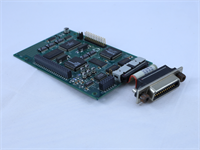
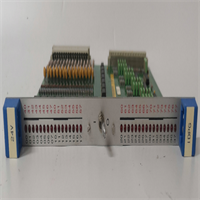
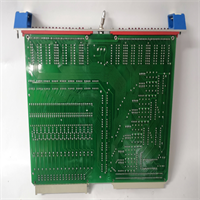
In the complex ecosystem of an ABB INFI 90 control system, the 940128102 (IDPG) board acts as the crucial translator between the harsh reality of the plant floor and the sensitive logic of the controller. While the main processor modules get the glory, these interface boards are the unsung heroes that protect the system from voltage spikes, ground loops, and electrical noise.We recently sourced this specific part for a pulp and paper mill where a corroded interface board was causing erratic readings on a critical pressure transmitter. The original 940128102 had suffered from decades of exposure to sulfur compounds in the digester area, leading to trace corrosion. Replacing it restored signal integrity instantly. Unlike generic signal converters, the 940128102 is engineered with the exact pinout and timing characteristics required to handshake seamlessly with Bailey/ABB immersion modules. To be frank, trying to substitute this with a modern generic isolator often results in communication timeouts or scaling errors because the proprietary bus protocol expects specific impedance and response times that only the original IDPG hardware provides.
Key Technical Specifications
| Parameter | Value |
|---|---|
| Part Number | 940128102 (IDPG Series) |
| System Compatibility | ABB Bailey INFI 90, Symphony Plus (Legacy Nodes) |
| Function | Signal Conditioning / Interface / Isolation |
| Input/Output | Configurable based on specific application (Typically 24VDC Digital or ±10V/4-20mA Analog) |
| Isolation | Galvanic Isolation (Optical or Magnetic) to prevent ground loops |
| Connection Type | Proprietary High-Density Connector (matches INFI 90 Backplane or Ribbon Cable) |
| Mounting | Panel Mount or Sub-rack Assembly (depending on specific chassis config) |
| Power Requirement | Derived from Backplane or External 24VDC (Check specific wiring diagram) |
| Operating Temperature | -20 °C to +60 °C |
| Certifications | UL, CE, CSA (Original Manufacturing Standards) |
| Dimensions | Custom form factor for INFI 90 integration |
| Status | Obsolete / End of Life (EOL) – Limited Availability |
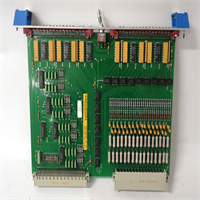
IDPG 940128102 ABB
Application Scenarios & Pain Points
A combined-cycle power plant experienced intermittent tripping of a gas turbine because a vibration sensor signal was being corrupted by noise from a nearby variable frequency drive (VFD). The root cause was a failing 940128102 interface board whose internal isolation barrier had degraded. The noise was bleeding through to the control logic, falsely indicating a high-vibration condition. Replacing the IDPG board restored the galvanic isolation, filtering out the VFD noise and stabilizing the turbine operation. This component is vital because it is the first line of defense against electrical transients that can fry expensive processor modules.
- Power Generation (Turbine/Boiler): Need to interface legacy 4-20mA sensors with digital INFI 90 nodes? The 940128102 provides the necessary scaling and isolation to ensure accurate readings.
- Oil & Gas Pipelines: What if your remote station has significant ground potential differences between the field instrument and the control cabinet? The IDPG board’s isolation prevents ground loop currents from corrupting data or damaging equipment.
- Water/Wastewater Treatment: Used in lift stations where long cable runs act as antennas for RF noise. The signal conditioning features of the 940128102 filter out high-frequency interference, ensuring stable pump control.
- Steel Mill Rolling Mills: High-current DC drives create massive electromagnetic fields. The robust shielding and isolation of the IDPG series protect the DCS logic from induced voltages.
Case Study:
A large automotive assembly plant in the US relies on an INFI 90 system to control its paint shop conveyor and robot interlocks. Over time, they began experiencing “ghost” alarms where limit switches would appear to trigger and untrigger randomly. Maintenance replaced dozens of field switches and miles of cable with no success. Finally, a senior controls engineer traced the issue to the 940128102 interface boards in the main rack. Testing revealed that the internal opto-couplers on several boards had degraded, causing them to switch states erratically under load. The plant procured a set of 10 spare 940128102 units. During a weekend shutdown, they swapped the boards. The random alarms ceased immediately. The cost of the boards (3,000 total) prevented a potential 2-day production halt (2M loss) that would have occurred if the issue had escalated during a peak production run.Lessons Learned: Installation Pitfalls
- Pin Configuration & Orientation — The connectors on legacy boards like the 940128102 are often keyed, but force can still be applied incorrectly. ❗ We once saw a technician force a ribbon cable in one position off, bending multiple pins on the board header. This created open circuits that were extremely difficult to diagnose later. Always align the keying notch visually and apply even pressure across the connector, not just on one side.
- Grounding & Isolation Integrity — The primary purpose of the IDPG board is isolation. If the mounting screws touch a grounded rail in a way that bridges the isolated section (due to a missing insulating washer or stray wire strand), the isolation is bypassed. Ensure all mounting hardware matches the original schematic, including any nylon washers or standoffs provided.
- Static Discharge (ESD) Sensitivity — These boards contain sensitive analog components and opto-couplers. Handling them without an ESD wrist strap, especially in low-humidity environments, can zap the internal circuitry, leading to “dead on arrival” or intermittent failures weeks later. Always use proper ESD protection when removing or installing.
- Wiring Torque & Strain Relief — If the board uses screw terminals for field wiring, over-tightening can crack the PCB traces, while under-tightening leads to arcing and heat. Use a calibrated torque screwdriver. Additionally, ensure field cables are strain-relieved; if a cable is pulled, it should not transfer force to the board’s connector, which can fracture solder joints.
- Compatibility with Module Revisions — Occasionally, ABB released revised versions of interface boards with slight firmware or component changes. While usually backward compatible, mixing very old field wiring configurations with new board revisions might require checking jumper settings or dip-switch positions that were factory-set on the old unit but default on the new one. Compare the physical layout of the old and new boards side-by-side before installation.