 Tel:
Tel:  Email:
  WhatsApp:
 Description
Technical Specifications (For Spare Parts Verification)
- Product Model: DATX110
- Manufacturer: ABB
- System Platform: AC 800M within 800xA Distributed Control System using S800 I/O
- Output Channels: 16 independent electromechanical relays
- Contact Rating: 250 VAC / 2 A resistive (per channel), suitable for both AC and DC loads
- Relay Type: Single-pole single-throw (SPST), normally open (NO) contacts
- Isolation: Galvanic isolation between logic and field sides (tested to >2.5 kV)
- Backplane Interface: Mounts on TB801/TB802 terminal base; powered and controlled via ModuleBus
- Diagnostic Features: Per-channel LED indication; no built-in contact feedback or coil monitoring
- Operating Temperature: 0°C to +60°C
- Mechanical Life: Rated for >100,000 operations (under nominal load)
System Role and Downtime Impact
The DATX110 provides a direct, high-voltage switching interface between the ABB control system and field actuators that cannot be driven by standard transistor outputs. It is commonly used to energize motor contactor coils, emergency vent solenoids, local alarm circuits, or auxiliary equipment requiring mains-level control. Because it uses physical relays, it bridges the gap between low-voltage logic and industrial power circuits without external interposing relays.
In critical sequences—such as turbine trip initiation, fire suppression activation, or batch dump valve control—a failed relay (stuck open or welded closed) can have severe consequences. A stuck-open relay prevents actuation, potentially disabling a safety function. A welded-closed relay may cause unintended device energization, leading to unsafe conditions. Since the module lacks contact feedback, such faults often go undetected until a demand occurs, making it a latent single point of failure in non-redundant applications.
Reliability Analysis and Common Failure Modes
As an electromechanical device, the DATX110 is inherently subject to wear. The dominant failure modes include: contact erosion or welding due to inductive load arcing (especially when switching motor coils without snubbers), coil burnout from sustained overvoltage or thermal stress, and mechanical fatigue of the armature mechanism after repeated cycling. Environmental factors such as dust ingress, high humidity, or corrosive atmospheres accelerate contact oxidation, increasing contact resistance and causing intermittent operation.
A key design limitation is the absence of diagnostic feedback—operators cannot determine if a relay has actually switched without external monitoring. Additionally, relays are sensitive to shock and vibration, which can cause false triggering or premature wear in harsh industrial settings.
Recommended maintenance practices include: limiting switching of inductive loads without proper surge suppression, performing periodic functional tests by commanding each output and verifying field response, inspecting for signs of overheating at terminals, and replacing modules proactively after 5–7 years of heavy use—even if still operational. Spares should be stored upright in dry, vibration-free conditions to prevent internal component shift.
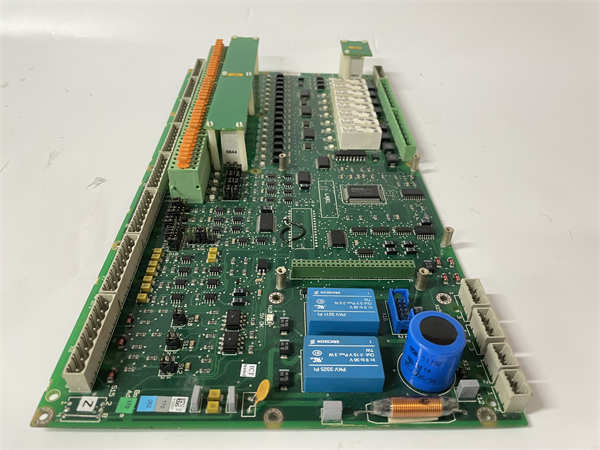
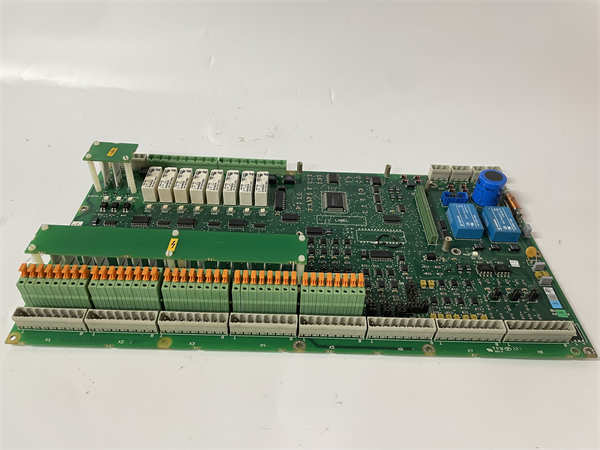
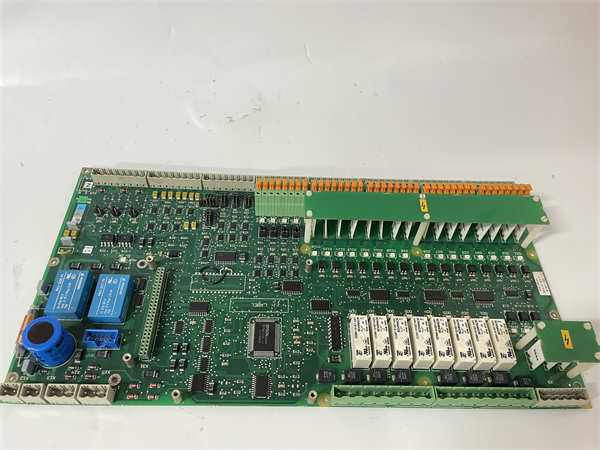
ABB 3ASC25H209 DATX110
Lifecycle Status and Migration Strategy
ABB has discontinued the DATX110 as part of its legacy S800 I/O phase-out. No new units are produced, and factory support is unavailable. Remaining inventory consists of used or aged stock, where relay contact integrity cannot be guaranteed without full life-cycle testing.
As a temporary measure, facilities can source modules only from vendors who perform full channel actuation testing under load (e.g., 240 VAC @ 1.5 A) and provide test logs. However, given the mechanical nature of relays, even “tested good” units may have reduced remaining life.
For long-term reliability, ABB recommends migrating to solid-state alternatives. While there is no direct relay-output successor in the current S800 portfolio, the preferred approach is to use a modern transistor-based DO module (e.g., DSDO 156, 3BSE042247R1) paired with external panel-mounted interposing relays that are easily accessible for inspection and replacement. This decouples the fragile switching element from the expensive I/O module, simplifying maintenance and improving diagnostics. In new designs, this architecture is now standard. For existing systems, retrofitting a relay panel during a scheduled outage provides a cost-effective path to eliminate dependency on obsolete integrated relay modules like the DATX110 while maintaining full field compatibility.