 Tel:
Tel:  Email:
  WhatsApp:
 Description
Key Technical Specifications (For Spare Parts Verification)
- Product Model: 216NG63
- Manufacturer: ABB
- System Family: AC 800M programmable automation controller (part of ABB’s 800xA distributed control system)
- Input Channels: 16 isolated digital inputs
- Input Voltage Range: Typically 24 VDC nominal (with wide tolerance, e.g., 15–30 VDC)
- Input Type: Sinking or sourcing (depending on terminal base configuration)
- Filter Time: Adjustable (typically 0–20 ms) to suppress contact bounce or noise
- Isolation: Group or channel-to-channel isolation (via terminal base, e.g., TB820/TB840)
- Redundancy Support: Compatible with redundant AC 800M I/O configurations
- Mounting: DIN rail in S800 I/O station
- Communication: Via PROFIBUS DP or native AC 800M backplane (based on terminal base)
- Diagnostic Features: Module status LED; input state indication per group or channel (depending on base)
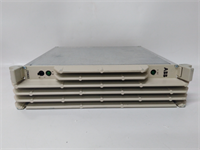
System Role and Downtime Impact
The 216NG63 serves as a primary interface for discrete field signals—such as limit switches, ESD pushbuttons, motor status contacts, and valve position feedback—in process automation systems across oil & gas, power, and chemical plants. These signals feed directly into safety interlocks, sequence logic, and operator displays. A failed or degraded module may result in “stuck” input states (e.g., falsely indicating a valve is closed), which can prevent startup, cause nuisance trips, or—more critically—mask hazardous conditions. In non-redundant applications, a single module fault can compromise multiple safety functions simultaneously.
Reliability Analysis and Common Failure Modes
Despite robust industrial design, this module exhibits several aging-related vulnerabilities:
- Degradation of optocouplers due to prolonged exposure to high ambient temperatures, leading to increased propagation delay or complete signal loss
- Corrosion or oxidation on terminal blocks and backplane connectors, causing intermittent contact or high resistance
- Damage to input protection circuits from voltage transients induced by nearby inductive loads or lightning surges
- Failure of onboard filtering capacitors, resulting in susceptibility to electrical noise and false triggering
A notable limitation is the dependency on external terminal bases for channel isolation and wiring—these bases often contain passive components that also degrade over time. Additionally, the module provides minimal per-channel diagnostics; a failed input may only be detectable through functional testing or process discrepancy.
Preventive maintenance should include: periodic verification of input response using simulated field signals, thermal inspection for hot spots, checking grounding integrity, and ensuring proper separation from high-voltage cables to minimize EMI.
Preventive maintenance should include: periodic verification of input response using simulated field signals, thermal inspection for hot spots, checking grounding integrity, and ensuring proper separation from high-voltage cables to minimize EMI.
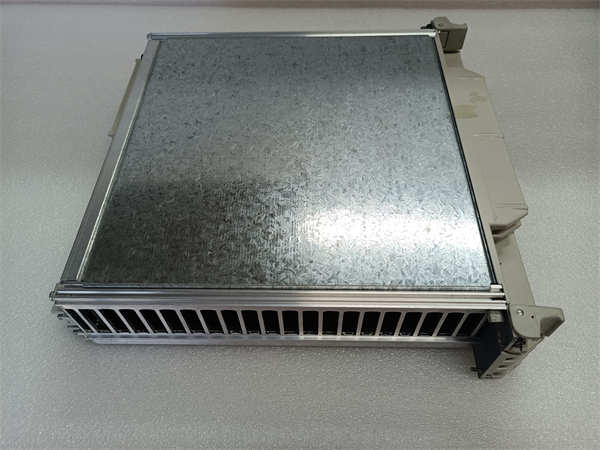
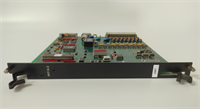
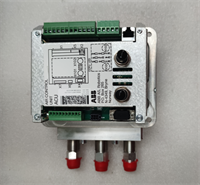
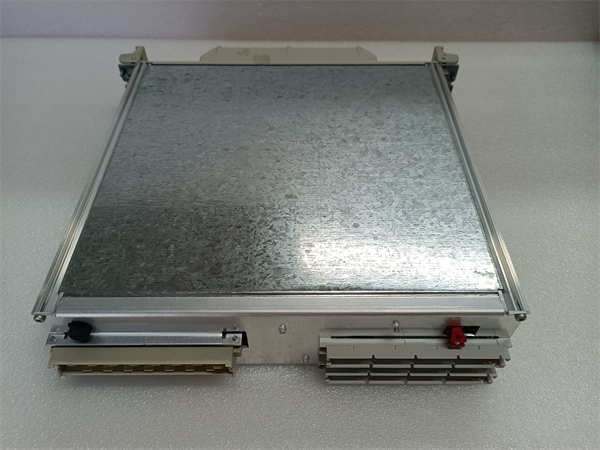
ABB 216NG63
Lifecycle Status and Migration Strategy
ABB has phased out the 216NG63 as part of its transition to higher-density and more diagnostic-rich I/O platforms. The module is no longer listed in current product catalogs, and factory support is restricted to legacy service contracts. New units are typically old stock with unknown storage history, raising concerns about component shelf life—especially electrolytic capacitors and optoelectronics.
Interim risk mitigation includes:
Interim risk mitigation includes:
- Maintaining a minimum of two tested spares per critical system
- Using loop simulation tools during outages to validate module functionality
- Implementing external dry-contact monitoring via auxiliary relays where safety-critical
For long-term reliability, ABB recommends upgrading to the DI810 (S800 series) or S900 digital input modules, which offer enhanced diagnostics, faster update rates, and better integration with modern 800xA cybersecurity features. However, such migration requires re-engineering of I/O assignments, marshalling cabinets, and re-commissioning of control logic. Until then, disciplined asset tracking, calibration records, and proactive sparing remain essential to sustain operational integrity in legacy installations.