 Tel:
Tel:  Email:
  WhatsApp:
 Description
Key Technical Specifications
| Parameter | Specification |
|---|---|
| Order Code | GJR5250200R0001 |
| Short Type | 07SK90 R1 |
| CPU Architecture | Proprietary ABB AC 400 |
| Program Memory | 512 KB (User available) |
| Data Memory | 256 KB |
| Communication | CS31 System Bus (Master/Slave) |
| Interface Ports | RS232 (Service), CS31 Bus Terminal |
| Supply Voltage | 24V DC (-20% / +25%) |
| Current Consumption | Approx. 0.8 A @ 24V DC |
| Operating Temp | 0°C to +55°C |
| Storage Temp | -25°C to +70°C |
| Mounting | DIN Rail or Rack Mount (AC 400 Chassis) |
| Weight | Approx. 0.4 kg |
 Product Introduction
 Product Introduction
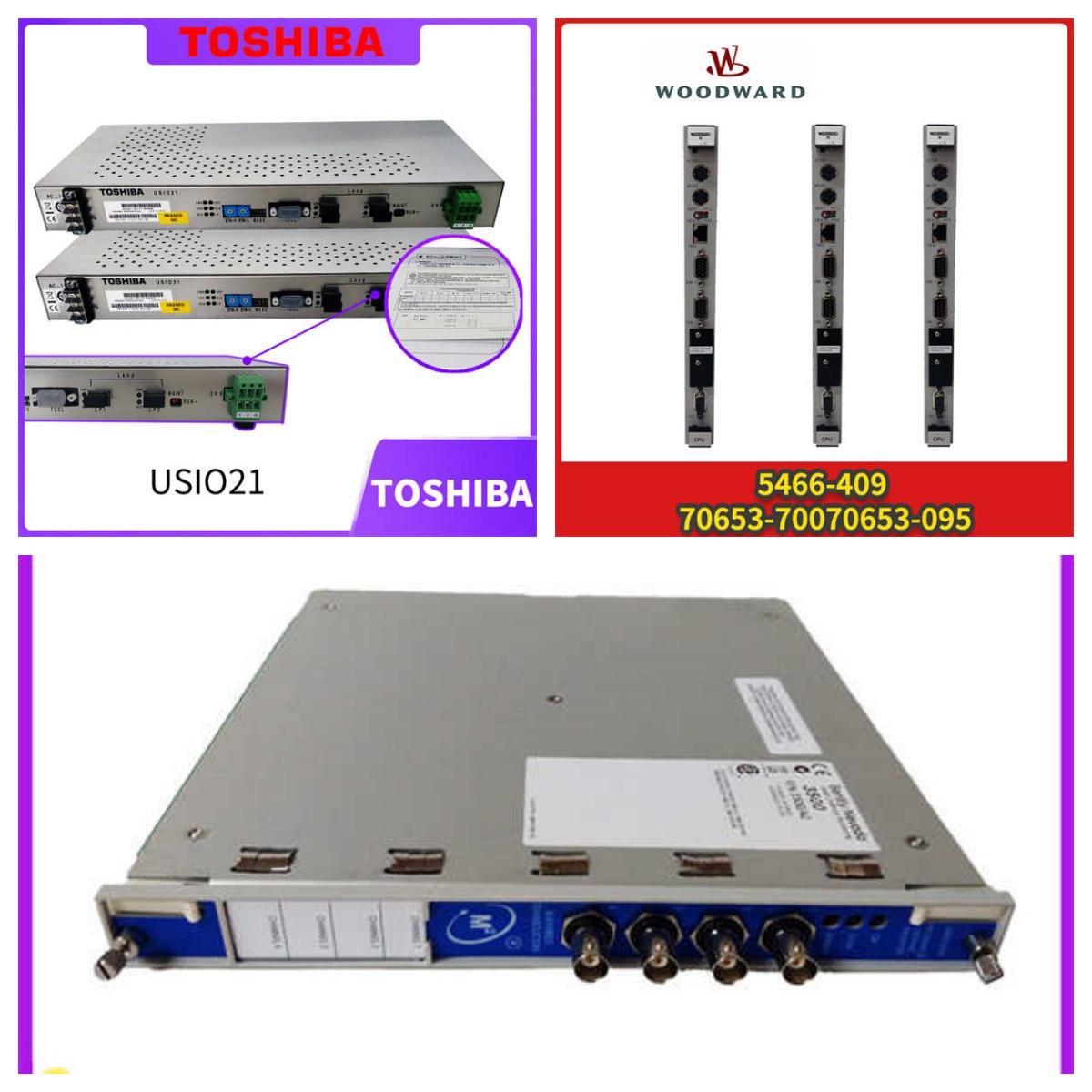
The ABB 07SK90 R1 (GJR5250200R0001) serves as the central processor for the AC 400 automation system, widely deployed in power generation and heavy industrial control applications during the 1990s and early 2000s. It executes user logic, manages I/O scanning, and acts as the master controller for the CS31 distributed I/O bus.Field data indicates this module typically handles scan times under 10ms for standard logic blocks, ensuring deterministic control for turbine auxiliary systems. Unlike newer Ethernet-based controllers, the 07SK90 relies on the robust CS31 serial protocol, which remains operational in many plants due to its noise immunity in high-voltage environments. We verify the battery-backed RAM retention before shipping; units failing to hold data for 48 hours are rejected.
Installation & Configuration Guide
Phase 1: Preparation (10 min)
- Verify the rack power supply is OFF. Measure voltage at the rail terminals; ensure it reads 0V DC.
- Check the backplane connector pins on the rack for bending or corrosion.
- Locate the DIP switches on the front of the 07SK90. Document their current positions with a photo before touching them.
- Put on an ESD wrist strap. Connect it to the unpainted metal of the cabinet frame.
Phase 2: Removal (5–10 min)
- Disconnect the CS31 bus cables from the terminal block. Note the polarity (A/B lines).
- Release the locking lever or screws securing the module to the rack.
- Pull the module straight out. Do not rock it side-to-side, as this damages the 96-pin backplane connector.
- Immediately place the removed module into an anti-static bag.
Phase 3: Installation (10 min)
- Inspect the new 07SK90 R1 gold contacts. Clean gently with isopropyl alcohol if oxidation is visible (dull gray color).
- Align the module with the slot guides. Push firmly until the backplane connector seats fully. You should feel a distinct “click” or solid resistance stop.
- Secure the locking mechanism. Re-attach the CS31 bus wiring to the correct terminals. Tighten to 0.5 Nm torque.
- Restore DIP switch settings to match your documented configuration.
Phase 4: Power-On & Test (10 min)
- Apply 24V DC power to the rack.
- Observe the LED indicators on the 07SK90. The “RUN” LED should turn green steadily within 5 seconds.
- If the “ERR” LED flashes red, check the battery voltage (should be >3.0V) and program integrity.
- Connect a programming terminal via RS232 to verify online status and force a logic scan.
Troubleshooting Quick Reference
| Symptom | Probability | Action |
|---|---|---|
| No LEDs lit | High | Check 24V DC input at the module terminals. Verify fuse on the power supply unit. |
| Red “ERR” LED steady | Medium | Battery failure or corrupted RAM. Replace backup battery immediately; reload program from floppy/PC. |
| Red “ERR” LED flashing | Medium | Watchdog timeout or bus fault. Check CS31 termination resistors and cable shielding. |
| Cannot connect via RS232 | Low | Verify COM port settings (usually 9600 baud, 8N1). Check null-modem adapter wiring. |
| Intermittent faults | High | Loose backplane connection. Reseat the module and clean contacts with contact cleaner. |
Dimensions, Mounting & Wiring Notes
- Dimensions: 128 mm (H) × 85 mm (W) × 160 mm (D) including connectors.
- Mounting: Designed specifically for ABB AC 400 series racks. Requires standard 35mm DIN rail support if used in custom enclosures, but backplane connection is mandatory for operation.
- Terminal Notes: The CS31 bus uses screw terminals. Ensure wire gauge is between 0.5 mm² and 2.5 mm². Stranded wire requires ferrules to prevent fraying under the screw.
- Clearance: Maintain 50mm clearance above and below the module for airflow. The processor runs warm (approx. 45°C surface temp) under full load.
FAQ
Q: Will the 07SK90 R1 work in an AC 200 rack?
No. The backplane pinout and physical keying differ between AC 200 and AC 400 series. Attempting to force fit will bend pins and destroy the board. You must use an AC 400 compatible chassis.Q: I lost the original program. Can you extract it from this spare?
We cannot extract programs from refurbished spares. These units are wiped and tested with generic diagnostic code. You must restore your specific logic from your plant’s backup archives (floppy disk or PC file).Q: How do I know if the battery is good before installing?
Check the date code on the lithium battery. If it is older than 5 years, replace it proactively. A dead battery causes immediate program loss upon power cycling. We test voltage, but transport storage conditions vary.Q: Is this unit “New Original” or refurbished?
This is a Refurbished (Tested) unit. Genuine new stock has not been manufactured by ABB for over 15 years. Our refurbishment includes capacitor reforming, contact cleaning, and a 24-hour burn-in test.Q: What happens if I swap the DIP switches while powered up?
Do not do this. Changing configuration switches on live hardware can cause the CPU to reset unexpectedly or latch into a fault state. Always power down before altering DIP settings.Q: Can I use a modern USB-to-Serial adapter for programming?
Yes, but driver compatibility is critical. Use adapters with FTDI chipsets. Cheap generic adapters often fail to handle the specific handshaking signals required by legacy ABB protocols.Q: My system shows a “Bus Fault” after swapping the CPU.
Check the CS31 bus address settings. If the new module has a different default address or if the termination resistor was removed during swap, the master will lose communication with slaves. Verify the entire bus topology.