 Tel:
Tel:  Email:
  WhatsApp:
 Description
Key Technical Specifications (For Spare Parts Verification)
| Parameter | Detail |
|---|---|
| Product Family | ABB ACS1000 / ACS6000 MV Drives (DTC Technology) |
| Function | IGCT gate pulse generation, isolation, and monitoring |
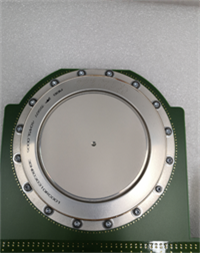
| Compatible Power Semiconductors | 5SHY4045L0006 IGCT (4.5 kV, 4 kA class) |
| Control Interface | Fiber-optic link from main control board (e.g., NIOC, AINT) |
| Power Supply Input | ±15 VDC and high-voltage bias rails from power cell |
| Diagnostic Features | IGCT status feedback, overcurrent detection, gate health monitoring |
| Mounting | Mounted directly on IGCT heat sink inside power cell enclosure |
| Cooling | Air-cooled (forced convection via drive cabinet fans) |
System Role and Downtime Impact
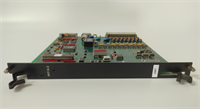
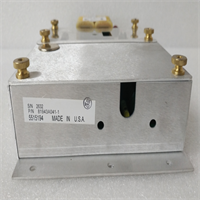
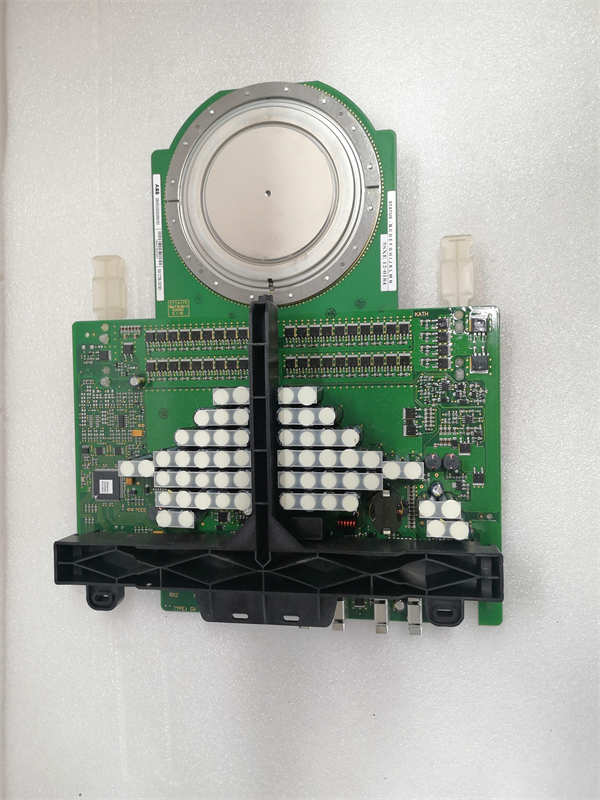
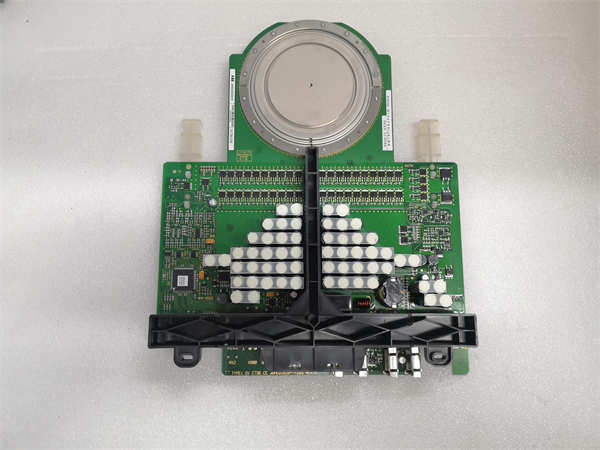
The GVC736CE101 (commonly labeled by its semiconductor part number 5SHY4045L0006) is a mission-critical sub-component within ABB’s IGCT-based medium-voltage drives, widely deployed in mining conveyors, oil & gas compressors, ship propulsion, and cement kilns. It resides inside the power cell and directly controls the turn-on/turn-off of the high-power IGCT—a key semiconductor enabling ABB’s Direct Torque Control (DTC).
This module receives low-energy optical commands from the central controller and converts them into precisely timed, high-current gate pulses (several amps) required to switch multi-kilovolt IGCTs. It also monitors IGCT health and reports faults via fiber back to the drive CPU.
If this gate driver fails:
- The associated IGCT does not switch correctly, causing DC bus overvoltage or phase imbalance
- The drive triggers a “Power Cell Fault” or “IGCT Fault” and trips immediately
- In multi-cell cascaded topologies (e.g., ACS1000), one failed cell may be bypassed—but repeated failures lead to derating or full shutdown
- Unplanned downtime can cost 500,000– 2M+ per day in heavy industry
Replacement requires:
- Full drive lockout and capacitor discharge (safety-critical HV procedure)
- Removal of the entire power cell from the stack
- Disassembly under ESD-controlled conditions
- Re-calibration or re-synchronization after reinstallation
Reliability Analysis and Common Failure Modes
Despite robust design, the gate driver is exposed to extreme electrical and thermal stress:
- Optocoupler/fiber interface degradation: Repeated high-dV/dt transients degrade the optical receiver, causing delayed or missed gate pulses → IGCT misfiring.
- Gate resistor burnout: High peak currents during switching fatigue the surface-mount gate resistors, leading to open circuits and loss of drive capability.
- PCB delamination or carbon tracking: Moisture ingress or dust accumulation in harsh environments creates conductive paths on the high-voltage PCB sections.
- Capacitor aging: Local decoupling capacitors dry out, reducing pulse fidelity and increasing EMI susceptibility.
A key vulnerability is thermal cycling fatigue: drives in cyclic duty (e.g., hoists, mills) cause repeated expansion/contraction, cracking solder joints or traces over time.
Preventive best practices:
- Perform annual infrared thermography on power cells during operation
- Monitor drive event logs for “IGCT desaturation” or “gate timeout” warnings
- Maintain clean, dry, and filtered cooling air (< ISO 8573-1 Class 2)
- Keep spare gate drivers in climate-controlled, anti-static storage
ABB 5SHY4045L0006 3BHB030310R0001 3BHE039203R0101 GVC736CE101
Lifecycle Status and Migration Strategy
ABB discontinued the ACS1000/ACS6000 platforms in favor of the ACS6080 (liquid-cooled) and Ability™-enabled drives, which use modern IGBT or IGCT modules with integrated gate drivers and advanced diagnostics. The 5SHY4045L0006 / GVC736CE101 has been obsolete for over a decade.
No new production exists. Secondary-market units are often:
- Recovered from scrapped drives
- Missing firmware or calibration data
- Suffering from latent damage due to prior overloads
Short-term mitigation:
- Source and functionally test spares using ABB’s DriveComposer or third-party IGCT testers
- Implement cell redundancy strategies where possible (e.g., N+1 configuration)
- Stock complete power cells (not just gate boards) to reduce repair time
Long-term strategy:
- Plan phased migration to ABB Ability™ ACS6080 or ACS880 MV platforms
- Leverage ABB’s Life Cycle Service Agreements (LCSA) for extended support
- Consider retrofit solutions from specialized firms that offer modern gate driver drop-in replacements with improved reliability