 Tel:
Tel:  Email:
  WhatsApp:
 Description
Technical Specifications (For Spare Parts Verification)
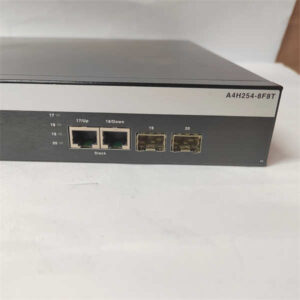
- Product Model: A4H254-8F8T
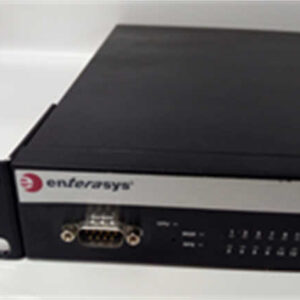
- Manufacturer: Enterasys Networks (now under Extreme Networks)
- Switch Type: Managed Layer 2 Ethernet switch
- Port Configuration:
- 8 × 10/100BASE-TX RJ-45 (auto-negotiating, auto-MDI/MDIX)
- 8 × 100BASE-FX SC multi-mode fiber ports (1300 nm wavelength)
- Switching Capacity: ~3.2 Gbps (non-blocking for full-duplex 100 Mbps traffic)
- Forwarding Rate: Up to 2.38 Mpps
- Management Interfaces: CLI (serial console, Telnet, SSH), Web GUI, SNMP v1/v2c
- Supported Features: IEEE 802.1Q VLANs, 802.1p QoS, IGMP snooping, STP/RSTP, port mirroring, ACLs (basic)
- Power Input: 100–240 VAC, 50/60 Hz, internal power supply
- Form Factor: 1U rack-mountable
- Operating Temperature: 0°C to 45°C
- Diagnostics: Per-port link/activity LEDs, system status indicators
System Role and Downtime Impact
The A4H254-8F8T was widely deployed in early-to-mid 2000s industrial control systems where electrical isolation and noise immunity were required—hence the inclusion of fiber uplinks. It typically served as a zone boundary switch, connecting local copper-based field devices (e.g., Allen-Bradley ControlLogix I/O, Siemens S7 stations) to a central control room via fiber-optic backbone. This design mitigated ground loops and EMI in electrically harsh environments like steel mills, water treatment plants, or automotive assembly lines.
Failure of this switch results in complete loss of communication for all downstream devices on its copper ports and/or disconnection from the supervisory network via fiber. In non-redundant architectures—which were common at the time—this causes immediate production stoppage, loss of HMI visibility, and potential safety interlock activation. Recovery depends entirely on having a pre-configured, tested spare, as reconfiguration without documentation can take hours or days.
Reliability Analysis and Common Failure Modes
Despite its ruggedized intent, the A4H254-8F8T exhibits predictable age-related failures:
- Internal Power Supply Degradation: Electrolytic capacitors dry out over time, causing intermittent reboots or failure to power on—especially in high-temperature panels.
- Fiber Port Optical Loss: SC connectors accumulate dust or suffer micro-cracks in the ferrule, increasing insertion loss and causing link flapping. Multi-mode transceivers may also degrade due to laser diode aging.
- Copper Port PHY Failures: Repeated ESD events or voltage surges on unshielded field cables can damage the physical layer ICs, leading to port negotiation failures or excessive CRC errors.
- Firmware Corruption: Unexpected power loss during operation (common in older facilities) can corrupt the boot loader, rendering the unit unresponsive.
Preventive Maintenance Recommendations:
- Clean fiber connectors annually with approved optical cleaning kits.
- Monitor port error counters via SNMP for early signs of PHY degradation.
- Verify stable AC input with surge protection and line conditioning.
- Maintain at least one fully configured spare with identical VLAN, IP, and QoS settings—stored in ESD-safe packaging.
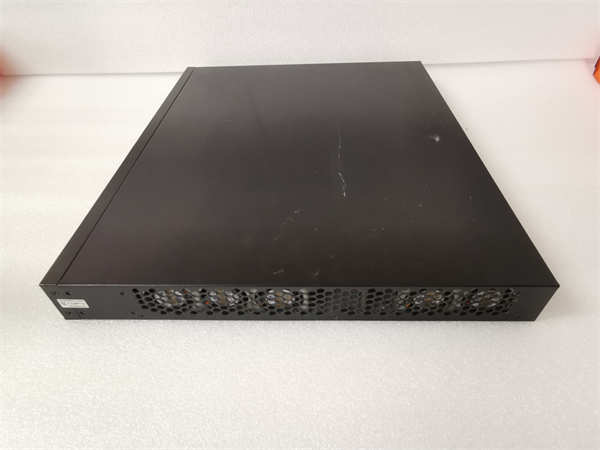
A4H254-8F8T ENTERASYS
Lifecycle Status and Migration Strategy
Enterasys discontinued the A4H series over a decade ago. Extreme Networks provides no official support, security patches, or replacement units. Continued use exposes OT networks to unpatched vulnerabilities (e.g., weak default credentials, SNMP community strings) and escalating spare parts risk.
Short-Term Mitigation:
Source tested units from certified industrial IT recyclers. Clone configurations using backup files (if available) and validate all VLANs and fiber links before deployment.
Long-Term Migration Path:
Upgrade to a modern industrial-grade managed switch such as:
- ExtremeSwitching™ ISW-Series (e.g., ISW-200-8F8T): Offers 8x copper + 8x SFP fiber slots, hardened design, IPv6, ACLs, and MRP ring redundancy.
- Hirschmann™ OCTOPUS or Siemens SCALANCE XB-200: Provide PROFINET diagnostics, enhanced cybersecurity (802.1X, RADIUS), and extended temperature ranges.
Migration requires:
- Reconfiguring VLANs and QoS policies
- Updating firewall/ACL rules if integrated into defense-in-depth architecture
- Potentially replacing legacy multi-mode fiber with OM3/OM4 if upgrading to Gigabit
A phased approach—replacing one switch per planned outage—minimizes disruption while systematically retiring obsolete infrastructure and improving network resilience, security, and supportability.