 Tel:
Tel:  Email:
  WhatsApp:
 Description
Technical Specifications (For Spare Parts Verification)
- Product Model: A4H124-24TX
- Manufacturer: Enterasys Networks (acquired by Extreme Networks in 2013)
- Device Type: Layer 2 managed Ethernet switch
- Port Configuration: 24 × 10/100BASE-TX RJ-45 ports, 2 × Gigabit uplink slots (typically for SFP or 10/100/1000 copper)
- Switching Capacity: 12.8 Gbps (non-blocking for 10/100 traffic)
- Management Interface: Web GUI, CLI via serial or Telnet/SSH, SNMP v1/v2c
- Supported Protocols: IEEE 802.1Q VLAN, 802.1p QoS, STP/RSTP, IGMP snooping
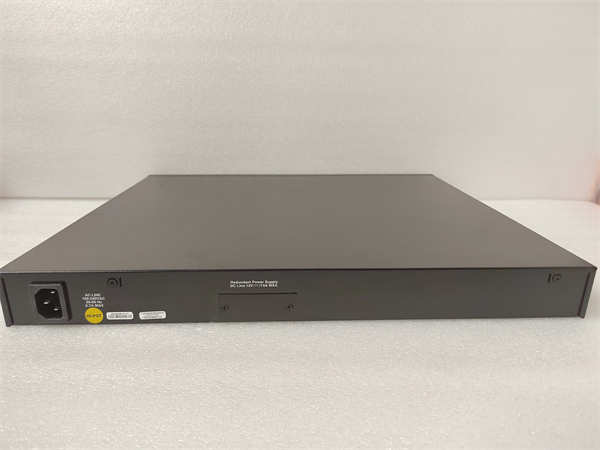
- Power Input: 100–240 VAC auto-ranging, internal PSU
- Form Factor: 1U rack-mountable
- Operating Temperature: 0°C to 45°C
System Role and Downtime Impact
The A4H124-24TX was commonly used in the 2000s as a workgroup or control network switch in manufacturing, utilities, and building automation systems. In industrial settings, it often serves as the central hub for a machine cell or process unit, linking controllers (e.g., Allen-Bradley, Siemens), operator panels, and drives. Because many legacy automation systems lack redundant network paths, a failure of this switch typically results in complete loss of communication to all downstream devices. This can trigger safety interlocks, halt production lines, or disable remote monitoring—leading to unplanned downtime that may persist until a verified replacement is installed. Given its age, firmware vulnerabilities may also expose the control network to cybersecurity risks if not properly segmented.
Reliability Analysis and Common Failure Modes
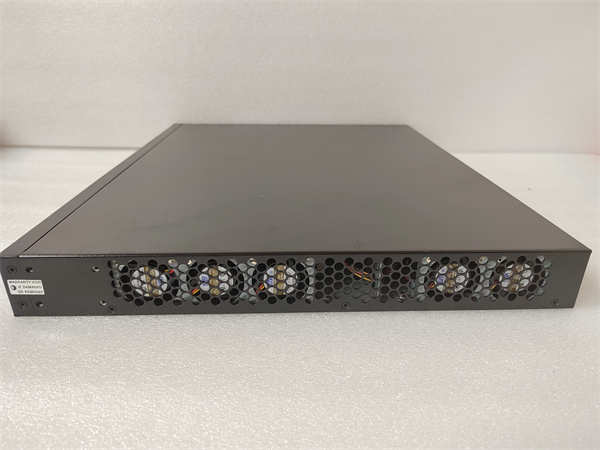
This switch is generally robust but suffers from predictable age-related failures. The most common issue is power supply degradation, manifesting as intermittent reboots or failure to power on—often due to dried-out electrolytic capacitors on the internal PSU board. A secondary failure mode is port PHY chip malfunction, causing specific ports to drop link or negotiate at reduced speed, usually triggered by repeated ESD events or voltage surges on connected cables. The unit’s passive cooling design makes it susceptible to dust accumulation in unfiltered environments, leading to thermal throttling or component stress over time. For preventive maintenance, technicians should: (1) inspect and clean ventilation slots quarterly, (2) verify stable input power with surge protection, (3) monitor port error counters via SNMP for early signs of PHY degradation, and (4) maintain at least one fully configured spare with identical firmware and VLAN settings.
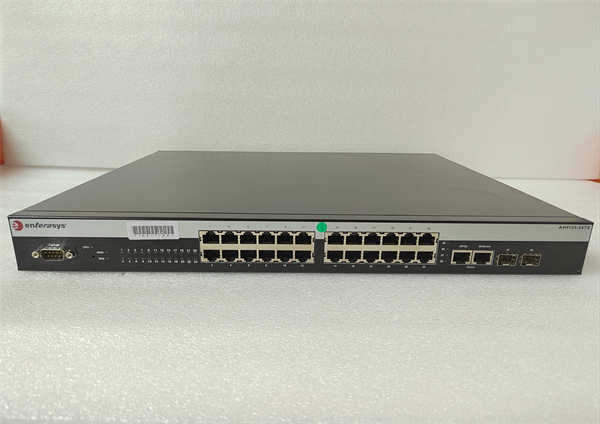
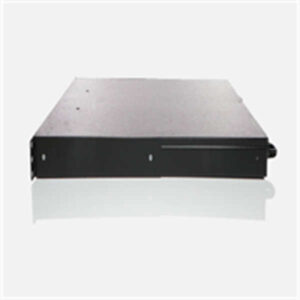
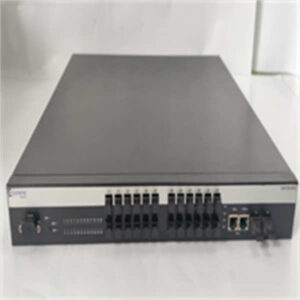
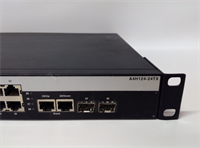
A4H124-24TX ENTERASYS
Lifecycle Status and Migration Strategy
Enterasys discontinued the A4H series well over a decade ago, and Extreme Networks provides no official support or firmware updates. Continued operation carries significant operational and security risks, including lack of patching for known vulnerabilities and zero access to technical assistance. As a short-term measure, organizations can source tested units from industrial IT surplus vendors and clone configurations using backup files. However, the recommended long-term strategy is migration to a modern industrial-grade switch. Extreme Networks suggests upgrading to the ExtremeSwitching™ K-Series (e.g., K350-24T) or Industrial Switches like the ISW-Series, which offer enhanced security (ACLs, 802.1X), deterministic networking (L2/L3, MRP), and extended temperature ranges. Migration requires reconfiguring VLANs, updating IP schemes, and potentially rewiring for fiber uplinks—but delivers improved reliability, manageability, and compliance with current OT security standards. A staged replacement during planned outages minimizes disruption while systematically retiring obsolete infrastructure.