 Tel:
Tel:  Email:
  WhatsApp:
 Description
Key Technical Specifications
- Measurement type: Conductivity, TDS, salinity (field-configurable)
- Sensor input: Dual channels; supports 2-electrode or 4-electrode cells
- Analog outputs: Two isolated 4–20 mA (user-scalable), one SPDT alarm relay (5 A @ 250 V AC)
- Power supply: 100–240 V AC or 24 V DC (selectable via internal jumper)
- Display: Backlit LCD with real-time diagnostics and calibration prompts
- Enclosure rating: NEMA 4X / IP66 (suitable for outdoor and washdown areas)
- Operating temperature: -20°C to +60°C (electronics); sensor up to 130°C with high-temp option
- Communication: HART Rev 5 over 4–20 mA loop
- Calibration: 1-, 2-, or 3-point with auto-buffer recognition
- Wetted materials: PVDF, PEEK, 316 SS (depends on sensor model)
- Approvals: CE, CSA, RoHS compliant
- Mounting: Wall or panel mount (bracket included)
Application Scenarios & Pain Points
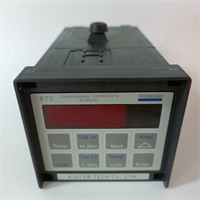
When conductivity in your boiler feedwater drifts out of spec, you can’t afford to wait weeks for an obsolete analyzer. The FOXBORO 873EC-JIPFGZ remains critical in legacy power, semiconductor, and refining applications—despite being discontinued by Emerson. I’ve seen plants run manual grab-sample labs for days because they couldn’t source a verified, tested unit. That’s not just inefficient; it risks corrosion, scaling, or unplanned trips.
Typical Applications:
-
Thermal Power – Boiler Blowdown Control
Optimizes blowdown rate based on real-time conductivity, reducing water/chemical use while protecting steam drums. -
Semiconductor – Ultrapure Water (UPW) Monitoring
Detects trace ionic contamination in rinse lines; requires low drift and stable zero—strengths of the 873EC platform. -
Pharmaceutical – CIP Rinse Validation
Tracks conductivity decay after cleaning cycles to confirm rinse completeness; data supports FDA 21 CFR Part 11 audits. -
Desalination – RO Brine Concentration
Handles high-salinity reject streams where generic transmitters foul quickly; PVDF wetted parts resist degradation. -
Refining – Quench Water Monitoring in FCCUs
Prevents catalyst deactivation by ensuring quench water purity; fast response avoids unit derates.
Q: “Can I swap this with a Rosemount 4088?”
A: Only if you’re ready to re-engineer I/O scaling, update control logic, and revalidate the entire loop. The 873EC uses FOXBORO-specific cell constants and signal conditioning. Drop-in compatibility matters—especially during emergency swaps.
Case Study: Refinery Avoids FCCU Shutdown
Background:
A Gulf Coast refinery’s fluid catalytic cracking unit used an 873EC-JIPFGZ to monitor quench water conductivity. After a lightning event, the transmitter faulted and forced manual operation—slowing catalyst regeneration and risking coking.
A Gulf Coast refinery’s fluid catalytic cracking unit used an 873EC-JIPFGZ to monitor quench water conductivity. After a lightning event, the transmitter faulted and forced manual operation—slowing catalyst regeneration and risking coking.
Problem:
The sensor was fine; the analog output board had failed. Corporate procurement flagged the model as “obsolete—no new orders.” Downtime cost: ~$220,000/hour.
The sensor was fine; the analog output board had failed. Corporate procurement flagged the model as “obsolete—no new orders.” Downtime cost: ~$220,000/hour.
Solution:
We shipped a tested 873EC-JIPFGZ from our Xiamen warehouse within 24 hours. Pre-shipment steps included:
We shipped a tested 873EC-JIPFGZ from our Xiamen warehouse within 24 hours. Pre-shipment steps included:
- 24-hour stability test across 0.1–2,000 µS/cm range
- HART communication verified with AMS Device Manager v14.2
- DIP switch settings documented (24 V DC power, high-alarm relay)
- Calibration certificate included (NIST-traceable)
Result:
- Installed during scheduled 8-hour turnaround
- No reconfiguration needed—matched existing DeltaV I/O scaling
- Running reliably for 11+ months
- Client now stocks two spares with annual live-test rotation
One last note: Always confirm the full suffix. The “JIPFGZ” includes dual 4–20 mA outputs and high-temp sensor support. A “JIPFGY” looks identical but lacks the second output—enough to break your control strategy. We label every unit with its exact suffix and attach a QR code linking to its test report. Because when you’re replacing a critical analyzer at 2 a.m., guesswork isn’t an option.

- 873EC-JIPFGZ FOXBORO

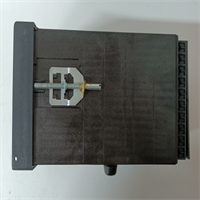
- 873EC-JIPFGZ FOXBORO

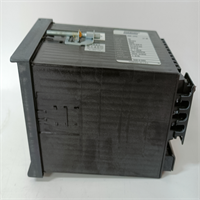
- 873EC-JIPFGZ FOXBORO