 Tel:
Tel:  Email:
  WhatsApp:
 Description
Key Technical Specifications
- Sensing mode: Diffuse with background suppression (fixed focus)
- Detection range: Up to 2.0 m (on white target, 90% reflectivity)
- Light source: Red LED, 650 nm
- Output type: 1 x PNP switching output + IO-Link (Class A, SDCI compliant)
- Supply voltage: 10–30 V DC (reverse polarity protected)
- Response time: ≤ 2 ms
- Connection: M12 x 1, 4-pin female connector (standard)
- Housing material: Stainless steel (303) barrel, IP67/IP69K rated
- Operating temperature: -25°C to +70°C
- Indication: Dual LEDs (power and output status) visible from front and side
- IO-Link revision: V1.1 compliant (supports process data, device identification, parameter backup)
- Mounting: M18 threaded barrel with lock nut (nut included)

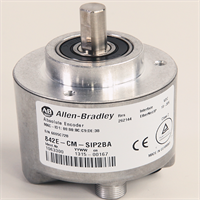
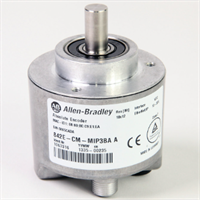
- 842E-CM-MIP3BA AB

Application Scenarios & Pain Points
In high-speed packaging or automotive assembly, a single failed photoelectric sensor can halt an entire line. The Allen-Bradley 842E-CM-MIP3BA is often embedded in legacy systems where mechanical tolerances are tight and ambient light or vibration rules out generic replacements. Rockwell quietly moved this model to “Not Recommended for New Designs” (NRND) years ago—yet thousands remain in service. Waiting 8–12 weeks for surplus isn’t an option when your OEE drops by 15% per hour of downtime.
Typical Applications:
-
Automotive – Door Assembly Fixture Verification
Confirms presence of stamped brackets before robotic welding; background suppression avoids false triggers from reflective metal behind. -
Food & Beverage – Bottle Count on High-Speed Fillers
Detects clear PET bottles at 400+ ppm; stainless housing withstands daily washdowns with caustic cleaners. -
Pharmaceutical – Blister Pack Inspection
Verifies tablet presence through transparent foil; fast response syncs with reject actuators. -
Material Handling – Pallet Presence in AS/RS
Mounted in narrow rack uprights; IO-Link allows remote sensitivity adjustment without climbing. -
Tire Manufacturing – Belt Layer Alignment Check
Operates reliably near ozone-generating equipment; stainless body resists rubber dust adhesion.
Q: “Can I use a standard 842E-CM-MIP3B without the ‘A’ suffix?”
A: No—the “A” denotes IO-Link capability. The non-IO-Link version (842E-CM-MIP3B) only has discrete output. If your CompactLogix or ControlLogix system expects IO-Link process data (e.g., signal strength, temperature), the non-A model will show as “device not responding.”
Real Example: Beverage Plant Avoids Weekend Shutdown
Background:
A major bottler in the Midwest lost detection on a label applicator due to a cracked lens on an 842E-CM-MIP3BA. The line ran 24/7; weekend downtime meant missing a Walmart shipment deadline.
A major bottler in the Midwest lost detection on a label applicator due to a cracked lens on an 842E-CM-MIP3BA. The line ran 24/7; weekend downtime meant missing a Walmart shipment deadline.
Problem:
Local distributor had no stock. Rockwell’s official channel quoted 10-week lead time for “remanufactured” units. Engineering team confirmed IO-Link was used for predictive maintenance alerts—so a basic sensor wouldn’t suffice.
Local distributor had no stock. Rockwell’s official channel quoted 10-week lead time for “remanufactured” units. Engineering team confirmed IO-Link was used for predictive maintenance alerts—so a basic sensor wouldn’t suffice.
Solution:
We shipped one of four verified units within 4 hours. Before dispatch:
We shipped one of four verified units within 4 hours. Before dispatch:
- Tested detection at 1.8 m on green PET (simulating real target)
- Verified IO-Link communication with Studio 5000 Logix Designer v32
- Inspected lens for micro-cracks under 10x magnifier
- Included wiring diagram showing pinout (Pin 4 = IO-Link, Pin 2 = PNP)
Result:
- Installed during 30-minute lunch break
- Parameter backup restored via IO-Link—no re-teaching needed
- Line met shipment target; avoided $350k penalty
- Plant added 842E spares to their MRO critical list
One practical tip: Always check the lens condition, even on “new” old stock. UV exposure over time can yellow polycarbonate lenses, reducing effective range by up to 30%. We store all sensors in UV-blocking bins and test optical performance—not just electrical function. Because in automation, seeing is believing… and detecting.
- 842E-CM-MIP3BA AB