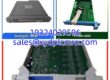
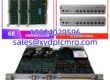
Key Technical Specifications
- Product Model: AWCII 040 10350-00104
- Manufacturer: Adept Technology
- System Architecture: AWCII 040 Robot Processor Controller
- Input Power: 24 VDC, 5A nominal
- Operating Temperature: 0°C to 85°C
- I/O Capability: Multi-channel programmable inputs and outputs
- Control Precision: High-accuracy motion and logic control
- Diagnostics: Advanced system monitoring and error tracking
- Physical Design: Compact, modular backplane insertion
- Application Domain: Industrial automation and robotics
Product Introduction
ADEPT AWCII 040 10350-00104 is a dedicated robot processor controller module designed for high-speed industrial automation tasks. It serves as the central brain within Adept’s AWCII series, executing programmable logic and coordinating multi-axis robotic movements.This controller module features a high-performance microprocessor capable of handling multiple communication interfaces simultaneously. With an operating temperature tolerance up to 85°C, it maintains reliable processing in demanding manufacturing environments, ensuring precise execution of complex automated sequences.
Installation & Configuration Guide
Preparation (10 min)
Power down the entire AWCII controller chassis. Disconnect the main 24 VDC power supply. Gather an anti-static wrist strap and verify the replacement module’s revision matches the original.Removal (5–10 min)
Remove the retaining screws securing the faulty processor. Grasp the module by its edges and pull straight out of the backplane. Inspect the backplane connector for bent pins or debris.Installation (10 min)
Align the AWCII 040 module with the backplane guide rails. Apply firm, even pressure until fully seated. Reinstall and tighten the retaining screws to secure the module against vibration.Power-On & Test (10 min)
Reconnect the 24 VDC power supply and power up the chassis. Monitor the processor LEDs for normal boot sequence. Load the robot control program and run a dry-cycle test to verify motion and I/O response.
Troubleshooting Quick Reference
| Symptom | Probable Cause | Action |
|---|---|---|
| No power LEDs | Backplane power failure | Measure 24 VDC at backplane connector |
| System halts randomly | Overheating or loose seat | Reseat module; verify chassis cooling fans |
| Communication fault | Network cable or IP mismatch | Check Ethernet connections and subnet config |
| Axis motion error | Servo drive communication loss | Verify amplifier module seating and cabling |
| Boot failure | Corrupt firmware or memory | Reload robot control software via teach pendant |

Dimensions, Mounting & Wiring Notes
- Mounting: Standard AWCII backplane slot insertion
- Retention: Captive mounting screws
- Power Wiring: Connect via backplane; ensure 24 VDC supply is regulated
- Grounding: Verify chassis ground integrity before power-up
- Clearance: Maintain adequate airflow around the processor module
FAQ
I need to replace my processor. What revision should I look for?
Always check the silkscreen on your current board (e.g., REV D, REV F). While AWCII 040 modules are generally cross-compatible, matching the exact revision prevents unexpected firmware conflicts.Can I hot-swap this processor module?
Absolutely not. The AWCII 040 must be installed with the chassis completely powered down. Hot-swapping will likely damage the backplane and the processor.What if my robot won’t boot after installing this?
First, check the teach pendant for specific error codes. It could be a corrupted program file rather than a hardware issue. Try reloading the system software from your backup media.Is this module compatible with older AWC controllers?
No. The AWCII 040 is specifically designed for the AWCII architecture. Older AWC systems require different processor modules. Do not force it into an incompatible backplane.How do I know if the CMOS battery is dead?
If the system loses its date, time, or network configuration every time you power cycle, the internal CMOS battery has likely failed. Plan to replace the module or send it for battery replacement.Do you test these before shipping?
Yes. Every module undergoes a functional verification under test conditions, including power-on self-test and I/O simulation. We document the test results and include a QC certificate with your shipment.